
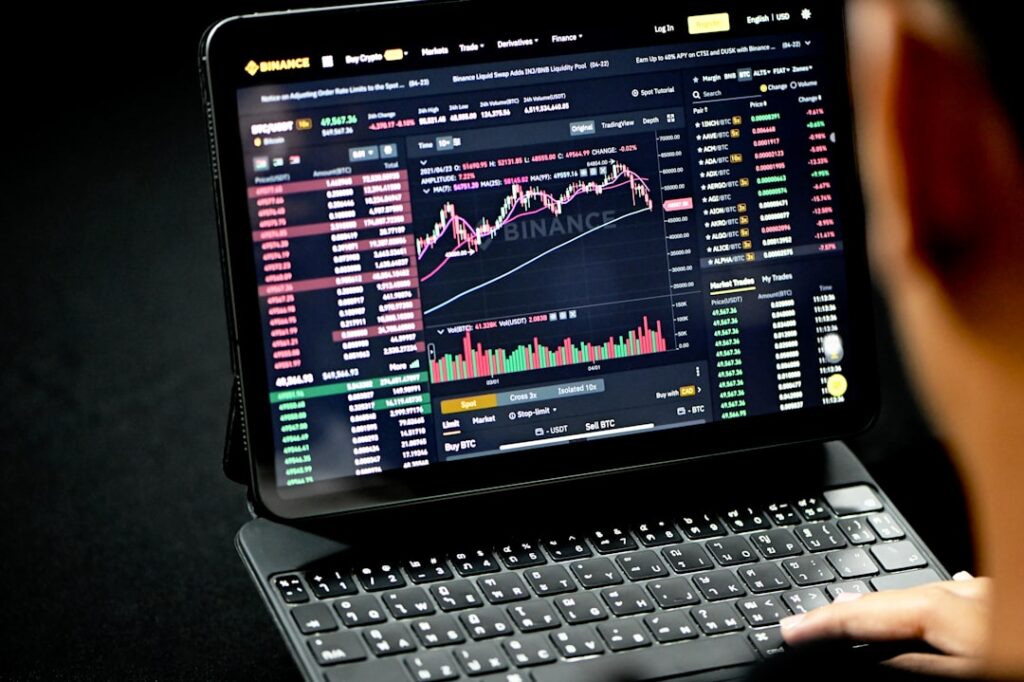
Artificial Intelligence (AI) has fundamentally altered trading practices and financial market operations. AI systems process large datasets using advanced algorithms to analyze market trends, detect patterns, and execute trades at high speeds with increased accuracy. This technology has improved trading operational efficiency and expanded access to sophisticated trading strategies previously available only to institutional investors.
Retail traders can now access AI-powered tools that facilitate data-driven decision-making through real-time market analysis. AI applications in trading encompass multiple functions including predictive analytics, risk management, and portfolio optimization. Machine learning algorithms enable AI systems to analyze historical data continuously and modify strategies in response to evolving market conditions.
This adaptive capability is essential in volatile markets where investor sentiment changes rapidly. Traders utilizing AI technology can potentially achieve competitive advantages when navigating complex market environments.
Key Takeaways
- AI significantly improves market prediction accuracy by analyzing vast datasets and identifying patterns.
- Enhanced prediction accuracy leads to more effective and adaptive trading strategies.
- Despite advantages, AI in trading faces challenges like data quality issues and model biases.
- Ethical considerations, including transparency and fairness, are crucial in AI-driven trading.
- The future of AI in market prediction promises continued advancements but requires careful regulation and oversight.
Understanding Market Prediction Accuracy
Market prediction accuracy is a critical metric for traders and investors alike, as it directly influences decision-making processes and investment outcomes. At its core, market prediction involves forecasting future price movements based on historical data, economic indicators, and various other factors. The accuracy of these predictions can significantly impact trading strategies, risk management practices, and overall portfolio performance.
In an environment where even minor fluctuations can lead to substantial gains or losses, understanding the nuances of prediction accuracy becomes paramount. To gauge market prediction accuracy, traders often rely on statistical models and performance metrics such as mean absolute error (MAE) or root mean square error (RMSE). These metrics provide insights into how closely predictions align with actual market movements.
However, it is essential to recognize that no prediction model is infallible; the inherent unpredictability of financial markets means that even the most sophisticated algorithms can falter. Therefore, a comprehensive understanding of market prediction accuracy involves not only evaluating past performance but also considering the limitations and uncertainties that accompany any forecasting endeavor.
How AI Enhances Market Prediction Accuracy

AI enhances market prediction accuracy through its ability to process and analyze vast datasets at unprecedented speeds. Traditional methods of market analysis often rely on human intuition and experience, which can be limited by cognitive biases and emotional decision-making. In contrast, AI algorithms can sift through millions of data points—ranging from historical price movements to macroeconomic indicators—identifying correlations and trends that may not be immediately apparent to human analysts.
This data-driven approach allows for more objective and informed predictions. Furthermore, machine learning models can continuously improve their predictive capabilities by learning from new data as it becomes available. This iterative process enables AI systems to adapt to changing market conditions, refining their predictions over time.
For instance, an AI model trained on historical stock price data can adjust its parameters in response to emerging trends or shifts in investor sentiment, ultimately leading to more accurate forecasts. By minimizing human error and bias, AI not only enhances prediction accuracy but also empowers traders to make more informed decisions based on reliable insights.
The Impact of AI on Trading Strategies
The integration of AI into trading strategies has revolutionized the way traders approach the markets. With the ability to analyze vast amounts of data in real-time, AI enables traders to develop more sophisticated strategies that are responsive to market dynamics. For instance, algorithmic trading strategies powered by AI can execute trades at lightning speed based on predefined criteria, capitalizing on fleeting opportunities that may arise within milliseconds.
This level of precision is unattainable through manual trading methods. Moreover, AI-driven trading strategies can incorporate a wide range of factors into their decision-making processes. From technical indicators to sentiment analysis derived from social media platforms, AI systems can evaluate multiple dimensions of market behavior simultaneously.
This holistic approach allows traders to create diversified strategies that account for various risk factors and potential outcomes. As a result, traders who leverage AI are better equipped to navigate complex market environments and optimize their performance across different asset classes.
The Advantages of AI in Market Prediction
| Metric | Traditional Methods | AI-Enhanced Methods | Improvement (%) | Impact on Trading |
|---|---|---|---|---|
| Prediction Accuracy | 60-65% | 75-85% | 15-20% | More reliable trade signals |
| Data Processing Speed | Minutes to Hours | Seconds to Minutes | 80-90% | Faster decision making |
| Market Anomaly Detection | Low | High | Significant | Early identification of risks |
| Adaptability to Market Changes | Low | High | Significant | Better handling of volatility |
| False Positive Rate | 20-25% | 10-15% | 10-15% | Reduced unnecessary trades |
The advantages of utilizing AI in market prediction are manifold. One of the most significant benefits is the ability to process large volumes of data quickly and efficiently. In today’s fast-paced financial markets, timely access to information is crucial for making informed trading decisions.
AI systems can analyze real-time data feeds from multiple sources—such as news articles, economic reports, and social media—allowing traders to stay ahead of market trends and react promptly to emerging developments. Additionally, AI enhances predictive accuracy by employing advanced statistical techniques and machine learning algorithms that can identify complex patterns within data. These models can uncover relationships between variables that traditional analysis might overlook, leading to more reliable forecasts.
Furthermore, the ability of AI systems to learn from past performance means that they can continuously refine their predictions based on new information, resulting in improved accuracy over time. This dynamic adaptability is particularly valuable in volatile markets where conditions can change rapidly.
Challenges and Limitations of AI in Trading

Despite its numerous advantages, the application of AI in trading is not without challenges and limitations. One significant concern is the reliance on historical data for training machine learning models. While past performance can provide valuable insights, it does not guarantee future results.
Consequently, models trained solely on past data may struggle to adapt to unprecedented scenarios. Another challenge lies in the potential for overfitting—a phenomenon where a model becomes too tailored to historical data and fails to generalize effectively to new situations.
Overfitting can lead to inflated performance metrics during backtesting while resulting in poor real-world performance. Additionally, the complexity of AI algorithms can create a “black box” effect, making it difficult for traders to understand how decisions are made. This lack of transparency raises concerns about accountability and trust in automated trading systems.
The Future of AI in Market Prediction Accuracy
Looking ahead, the future of AI in market prediction accuracy appears promising yet complex. As technology continues to evolve, we can expect advancements in machine learning techniques that enhance predictive capabilities even further. For instance, the integration of natural language processing (NLP) could enable AI systems to analyze unstructured data—such as news articles or earnings calls—more effectively, providing deeper insights into market sentiment and potential price movements.
This influx of diverse information could lead to more nuanced predictions that account for a broader range of influencing factors. However, as AI becomes increasingly prevalent in trading, regulatory scrutiny may intensify as well.
Ensuring that these systems operate transparently and ethically will be crucial for maintaining trust among investors and safeguarding market integrity.
Ethical Considerations in AI Trading
As with any technological advancement, the rise of AI in trading brings forth important ethical considerations that must be addressed. One primary concern is the potential for market manipulation through algorithmic trading strategies that exploit inefficiencies or create artificial volatility. The speed at which AI systems operate could lead to scenarios where they inadvertently contribute to market instability or exacerbate downturns during periods of high volatility.
Additionally, there are questions surrounding fairness and accessibility in the use of AI-driven trading tools. While institutional investors may have access to advanced AI technologies, retail traders might find themselves at a disadvantage if they cannot afford similar resources. This disparity raises concerns about equity within financial markets and whether all participants have an equal opportunity to benefit from advancements in technology.
In conclusion, while AI has undeniably transformed the landscape of trading by enhancing market prediction accuracy and optimizing strategies, it also presents challenges that require careful consideration. As we move forward into an era increasingly defined by artificial intelligence, it will be essential for stakeholders—traders, regulators, and technologists alike—to engage in ongoing dialogue about the ethical implications and responsibilities associated with this powerful tool. Balancing innovation with accountability will be key to ensuring that AI serves as a force for good within the financial markets.
FAQs
What is market prediction in trading?
Market prediction in trading refers to the process of forecasting future price movements and trends of financial assets such as stocks, commodities, or currencies. It helps traders make informed decisions about buying or selling.
How does AI improve market prediction accuracy?
AI improves market prediction accuracy by analyzing vast amounts of data quickly, identifying complex patterns, and learning from historical trends. Machine learning algorithms can adapt to new information, enhancing the precision of forecasts.
What types of AI techniques are used in market prediction?
Common AI techniques used in market prediction include machine learning, deep learning, natural language processing (NLP), and neural networks. These methods help process structured and unstructured data to generate insights.
Can AI predict market crashes or sudden changes?
While AI can identify patterns that may indicate potential market downturns or volatility, predicting sudden market crashes with complete certainty remains challenging due to the influence of unpredictable external factors.
What data sources does AI use for market prediction?
AI systems use a variety of data sources including historical price data, trading volumes, economic indicators, news articles, social media sentiment, and geopolitical events to make comprehensive market predictions.
Is AI market prediction suitable for all types of traders?
AI market prediction tools can benefit both individual and institutional traders by providing data-driven insights. However, the effectiveness depends on the trader’s understanding of AI outputs and integration with their trading strategies.
Are there any limitations to using AI in market prediction?
Yes, limitations include data quality issues, overfitting of models, market unpredictability, and the risk of relying solely on AI without human judgment. AI predictions should be used as one of several tools in decision-making.
How has AI changed traditional trading methods?
AI has automated data analysis, enabled real-time decision-making, improved risk management, and facilitated algorithmic trading, making market prediction more efficient and potentially more accurate compared to traditional manual methods.
Can AI adapt to changing market conditions?
Yes, AI models, especially those based on machine learning, can adapt to new data and evolving market conditions by continuously updating their algorithms to maintain prediction accuracy.
Is AI market prediction widely adopted in the financial industry?
Yes, many financial institutions, hedge funds, and trading firms have adopted AI technologies to enhance their market analysis and trading strategies due to the competitive advantage it offers.

