

Learning to trade is less about chasing every signal and more about understanding why a setup works. This guide breaks down straightforward, repeatable lessons for trading, stock market, NSE, BSE, Nifty — explained in plain language so you can apply them tomorrow. You will get practical ideas on setups, why simple rules beat complicated indicator stacks, how institutions hint at profit-booking, and where option premium and crude oil moves can create fast opportunities.
Table of Contents
- 🐆 The Cheetah vs Dogs Story: Why context beats hype
- 📈 Simple setups win: Why fewer indicators are better
- 💡 Understanding momentum and premium in options
- 📊 Institution behavior: reading profit-booking hints
- 📉 When not getting trades is fine
- 🧠 The three types of traders who succeed
- ⚙️ Anatomy of a reliable setup
- ⏱️ Quick setups: crude oil and short timeframes
- 🔒 Protect yourself from tips and scams
- 📚 Practice beats changing teachers
- 📉 Midcaps vs Nifty vs Bank Nifty: where to look
- 🎯 Targets and profit-taking strategy
- 📣 Building trading acumen: emotional control and sharpness
- 🏗️ Learning centers and practical training
- 🧾 Checklist before placing any trade
- 🔁 Summary: what to take away
- ❓ FAQ
- ✅ Final notes
🐆 The Cheetah vs Dogs Story: Why context beats hype
Imagine a cheetah sitting on the track while a pack of dogs run. In a straight sprint, dogs can outpace the cheetah because the cheetah’s burst and timing matter. The market behaves similarly. Random tips, flashy calls, and one-off signals are dogs running in a straight race. The cheetah is a disciplined, well-timed approach. Trading, stock market, NSE, BSE, Nifty setups that are timed and disciplined outperform noisy tips every single time.
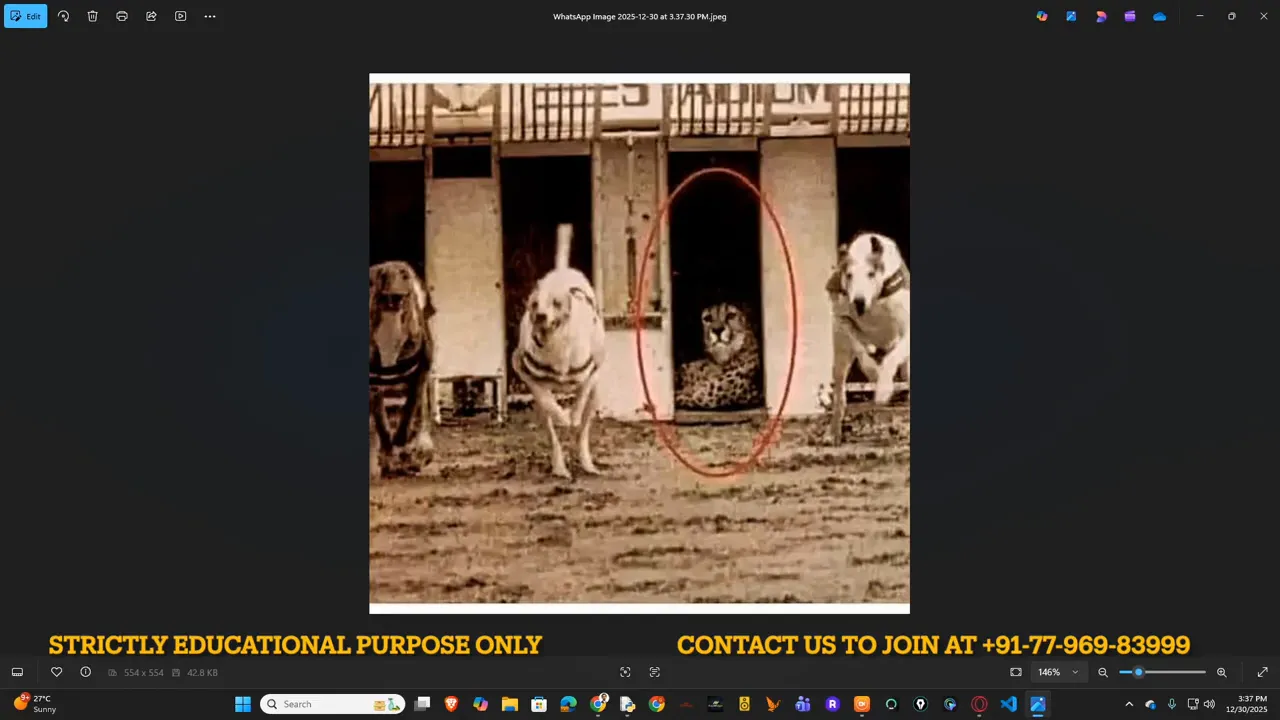
What matters is context: the price structure, angle of momentum, and institutional behavior. A single candle or a viral call does not make a strategy. Consistent setups do.
📈 Simple setups win: Why fewer indicators are better
Most traders try to fix a weak setup by adding more indicators. Ten indicators do not suddenly create an edge. They create confusion. Keep the chart simple: price action, one directional reference line, and a measure of money flow or volume are often enough to spot high-probability moves.
- Price line or breakout line — A clear resistance or breakout line is often the single most useful element.
- Angle or momentum — The slant of the move (an angle) shows conviction. Institutions leave traces in angles.
- Premium/option chart — For option traders, premium movements validate the directional bias.
The lesson is simple: trust a compact checklist rather than a toolbox of indicators. trading, stock market, NSE, BSE, Nifty traders who simplify last longer and perform better.
💡 Understanding momentum and premium in options
Options premium can tell you more than price alone. When a call premium jumps from 36 to 72, that is a signal of strong buyer interest. If the underlying Nifty moves modestly but premium doubles, the conviction behind the move is high. Watch the premium chart as a confirmatory instrument.
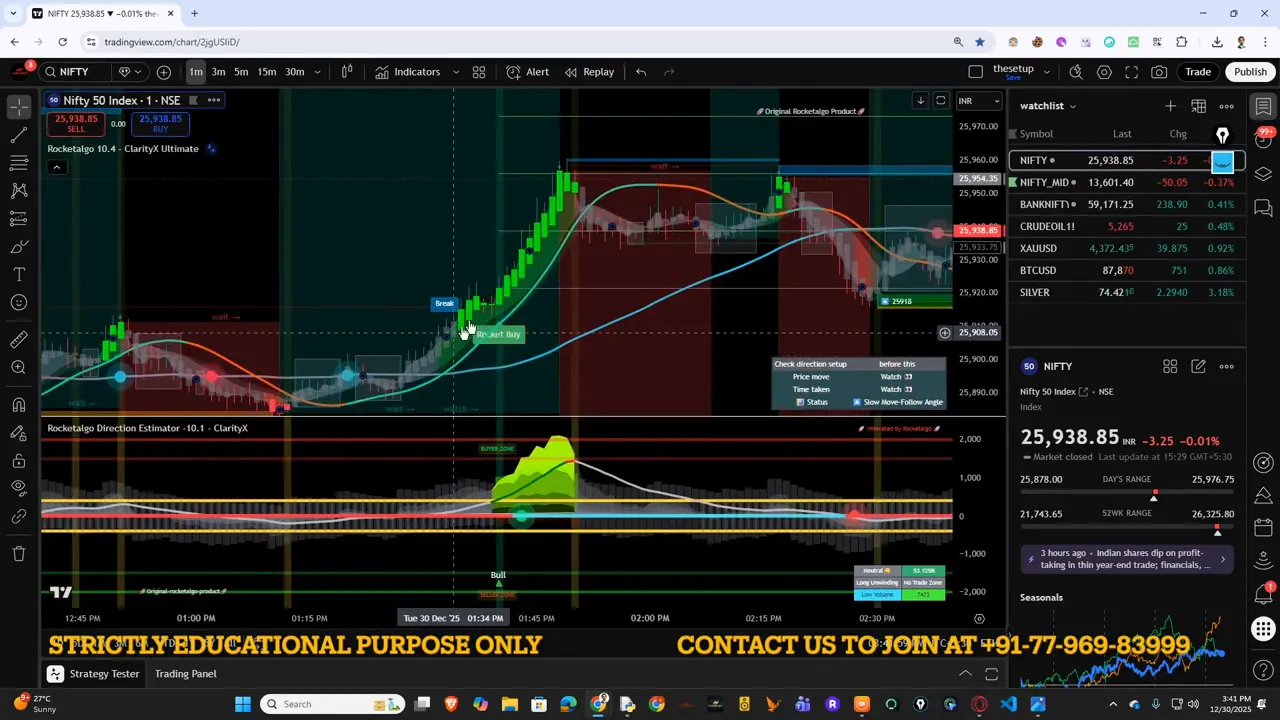
Example: a Nifty 25900 call whose premium doubled implied a strong directional move. You do not need to chase a perfect setup every day; you need to recognize high-conviction setups when they appear.
📊 Institution behavior: reading profit-booking hints
Big players leave fingerprints. Institutions book profit in predictable ways — at certain resistances, after particular angles flatten, or when a prior support becomes resistance. An indicator that models past institutional behavior and angle-based resistance gives you an early warning to exit or trim positions.
When the line that acted as initial resistance starts to turn price back, that is often the first hint institutions are booking profits. If the line breaks convincingly, the chance of a turn is still present; institutions may push price through and then reverse. Use that information.
📉 When not getting trades is fine
Not every day is for trading. If your setup does not produce a clean signal, staying out is a trade too. Many beginners panic about missed trades and fall for the next loud tip. That behavior rarely pays.
Measure your performance in quality trades, not quantity. trading, stock market, NSE, BSE, Nifty success comes from waiting for your edge and then executing with discipline.
🧠 The three types of traders who succeed
From experience, three trader archetypes do well:
- Qualified and patient — These traders know the rules and wait until conditions align.
- Faithful to process — They may not be polished, but they follow the system consistently.
- Rule-followers who avoid cleverness — They prefer rules over trying to outsmart the market.
Which one are you? If you change teachers every month, chase tips, and try shortcuts, you will struggle. Stick to practice and process to reach consistent results. trading, stock market, NSE, BSE, Nifty discipline beats cleverness every time.
⚙️ Anatomy of a reliable setup
Here are the components of a reliable setup that you can test and apply:
- Define the reference line — Where is the breakout or support/resistance?
- Confirm angle — Is momentum clean? Is the angle consistent?
- Validate with money flow — Are buyers or sellers adding volume?
- Check premium — For options, does premium confirm the directional conviction?
- Risk management — Position size, stop, and clear targets: first and second targets.
This structure keeps trades simple and repeatable. When the system gives a yes, you trade. When it does not, you sit out. trading, stock market, NSE, BSE, Nifty integrity comes from repeating this checklist consistently.
⏱️ Quick setups: crude oil and short timeframes
Crude oil often produces short, high-return moves that fit well with a tight timeframe strategy. A three-minute timeframe on crude can generate sharp swings. Example: one setup captured 29 points translating into a few thousand rupees per contract. For traders who understand timing and stops, these micro-jackpots are useful.

But remember: sideways markets are traps. If crude is rangebound, avoid forced trades. Only trade when momentum and premium back your view. trading, stock market, NSE, BSE, Nifty quick trades require discipline more than bravery.
🔒 Protect yourself from tips and scams
Tip sellers, automated tip groups, and loud “experts” are everywhere. Most are not interested in your learning. They want one-off profits from selling noise. Block them and stop arguing. If someone calls with overpromises — perfect indicators, perfect timings — they are selling fantasy.
Learn to ask the right questions before trusting a signal: Who is sharing the trade? What is their edge? Can they show consistent process, not one-off hits? trading, stock market, NSE, BSE, Nifty skepticism is healthy — verify, then trust.
📚 Practice beats changing teachers
Changing teachers or strategies every few weeks is a losing path. Whether you are preparing for an exam or markets, practice is the engine. Stick with one approach long enough to master it. That is how users in serious learning groups improve: they practice the same checklist until it becomes instinctive.
Ten different teachers will not replace disciplined practice. trading, stock market, NSE, BSE, Nifty improvement comes from repetition and feedback.
📉 Midcaps vs Nifty vs Bank Nifty: where to look
When Nifty and Bank Nifty are calm, midcaps often lead the next move. Momentum can rotate across segments — miners, metals, or midcap pockets. Watch the relative strength and color-coded indicators: red shading on a candle or a negative angle often shows dominant down-trend bias.

Observe where money flows: if major indices are quiet and midcaps pick up, that is a rotation signal. Use that rotation to balance your watchlist. trading, stock market, NSE, BSE, Nifty opportunity is everywhere — just be ready to spot the rotation.
🎯 Targets and profit-taking strategy
Always define a first target and a second target. Many setups hit the first target, pause, and then resume with institutional participation to hit the second. That’s why understanding angles and resistance lines matters: they tell you where profit-booking is likely.
When the institutional hint shows up, consider trimming rather than holding full size. That preserves capital and keeps you in the next leg if it forms. trading, stock market, NSE, BSE, Nifty smart profit-taking keeps your account healthy for the next opportunity.
📣 Building trading acumen: emotional control and sharpness
Trading demands mental sharpness. The word acumen sums up what you need — clear thinking, quick pattern recognition, and emotional control. If you come to the screen tired, emotional, or distracted, your odds drop dramatically.
Simple practices help: set a routine, keep a trade journal, and review only when calm. This improves your decision-making over time. trading, stock market, NSE, BSE, Nifty success is as much psychology as it is technical skill.
🏗️ Learning centers and practical training
Formal training helps when it focuses on practice, not hype. A learning center that emphasizes real-time practice, trade review, and technology tools will accelerate your progress. Look for programs that offer hands-on sessions, not just theory or sales pitches.
Build your own small lab: a demo account, a watchlist, and a practice routine. Use recorded sessions to rewind and understand why trades worked or failed. trading, stock market, NSE, BSE, Nifty training must be measurable: track improvement in setups, not just monthly returns.
🧾 Checklist before placing any trade
- Does price respect a clear line or breakout?
- Is the angle of momentum consistent?
- Does money flow or volume confirm direction?
- For options, is the premium movement supportive?
- Is risk defined with a stop and two targets?
- Are institutional hints considered?
If any answer is no, wait. trading, stock market, NSE, BSE, Nifty patience turns into profit over time.
🔁 Summary: what to take away
Trading is not about following the loudest voice. It is about building a disciplined, simple process and executing it consistently. Use price, angle, volume, and premium to validate setups. Watch institutional footprints and respect ranges. Avoid tip sellers, practice patiently, and trade only when your checklist turns green.
❓ FAQ
How do I stop falling for trading tips and scammers?
Stop engaging. Block callers, avoid groups that sell “perfect” trades, and insist on transparency. Ask for a clear edge, consistent process, and track record. Build independent checklists and practice with a demo account before risking real capital. trading, stock market, NSE, BSE, Nifty awareness is your first defense.
When should I use premium charts for options?
Use premium charts when trading options to confirm directional conviction. If premium moves significantly in line with underlying price and volume, it validates the move. Premium doubling or sharp jumps often indicate strong institutional or retail interest. trading, stock market, NSE, BSE, Nifty premium validation reduces false breakouts.
How many indicators should I use?
Use as few as possible. A breakout/reference line, a momentum angle, and a money flow or volume indicator are often sufficient. Ten indicators create noise. Keep your setup compact and repeatable. trading, stock market, NSE, BSE, Nifty simplicity improves execution.
Can crude oil be traded intraday with small capital?
Yes, crude oil can produce short-term, high-return moves on low timeframes. Use strict stops and trade only when momentum and range conditions align. Sideways periods are dangerous; avoid trading then. trading, stock market, NSE, BSE, Nifty short trades require discipline and defined risk.
How do institutions reveal profit-booking hints?
Watch key resistance lines and angle changes. If price touches a resistance and shows a reversal angle or increased selling volume, institutions may be booking profits. A break and quick reversal at a prior significant line often signals institutional activity. trading, stock market, NSE, BSE, Nifty reading these hints helps with timely exits.
✅ Final notes
Trading is a craft. It is built on practice, clarity, and discipline. Keep setups simple, respect institutional behaviour, use premium when trading options, and never let the noise of tip-sellers replace your process. If you focus on these building blocks and measure progress honestly, results follow.
Remember: the market rewards patience, not panic. trading, stock market, NSE, BSE, Nifty mastery is a marathon, not a sprint.
Need more help |
|
Contact us by clicking the button below |
| Click me |

