

This guide explains a practical, repeatable approach for intraday trading on the Indian exchanges. If you trade on the NSE or BSE and follow Nifty moves, this article breaks down a watchlist-first workflow, entry and exit rules, profit-booking logic, and the common mistakes that destroy performance. It is focused on real-market behavior, risk control, and how to capture short moves reliably when the market gives clear setups. trading, stock market, NSE, BSE, Nifty
Table of Contents
- 📘 Who should use this guide and why it matters
- 🧭 Quick definitions: setups, watchlists, and market states
- 🔎 How to design a bi-directional intraday watchlist (step-by-step)
- ⚙️ Entry rules: a simple, high-probability framework
- 📈 Managing trades and profit-booking logic
- 🧠 How market state changes the approach (trending vs sideways)
- 📊 Practical example: from watchlist to executed trade
- ⚠️ Common mistakes and how to avoid them
- 🛠️ Checklist: pre-market and live-session routine
- ✅ Example risk management formula
- 🔁 Practice, consistency, and what to track every day
- 🧾 Practical rules summary (cheat sheet)
- 📌 Practical examples and mini case studies
- 📚 Further reading and tools
- ❓FAQ
- 🧾 Final takeaway
📘 Who should use this guide and why it matters
This article is for intraday traders, scalpers, and active swing traders who trade on the NSE or BSE and track Nifty and sector action. It is helpful if you want a structured way to: build directional or bi-directional watchlists, avoid noisy entries during sideways markets, and use simple rules for profit-taking and stop management.
Keep in mind that successful short-term trading is not about indicators alone; it is about disciplined application of a strategy that respects market structure and liquidity. trading, stock market, NSE, BSE, Nifty
🧭 Quick definitions: setups, watchlists, and market states
Setup: a predefined price/volume pattern or technical signal you use to take a trade. Examples: range breakout with volume, pullback into a moving average with trend confirmation, or a high-probability reversal candle at support/resistance.
Watchlist: a short list of stocks or indices you monitor for live setups. A good intraday watchlist is directional but allows trades in both directions when the market structure flips.
Market state: trending, downtrending, uptrending, or sideways. Each state requires a different approach. The same watchlist can supply long or short trades depending on the prevailing state. trading, stock market, NSE, BSE, Nifty
🔎 How to design a bi-directional intraday watchlist (step-by-step)
Use this checklist to build a watchlist that captures trades in both directions and helps you avoid one-sided traps.
- Start with liquid names: pick high-volume stocks and active options on NSE and BSE. Liquidity reduces slippage and manipulation risk. trading, stock market, NSE, BSE, Nifty
- Mix index leaders and sector plays: include Nifty heavyweights, a couple of midcaps you know well, and one or two sector ETFs or futures.
- Scan for recent momentum: prefer stocks that show early session activity or premarket gaps; these produce cleaner intraday trends.
- Flag range-bound names: gray-out stocks that are choppy or show profit-booking patterns and avoid them until a new institutional flow appears.
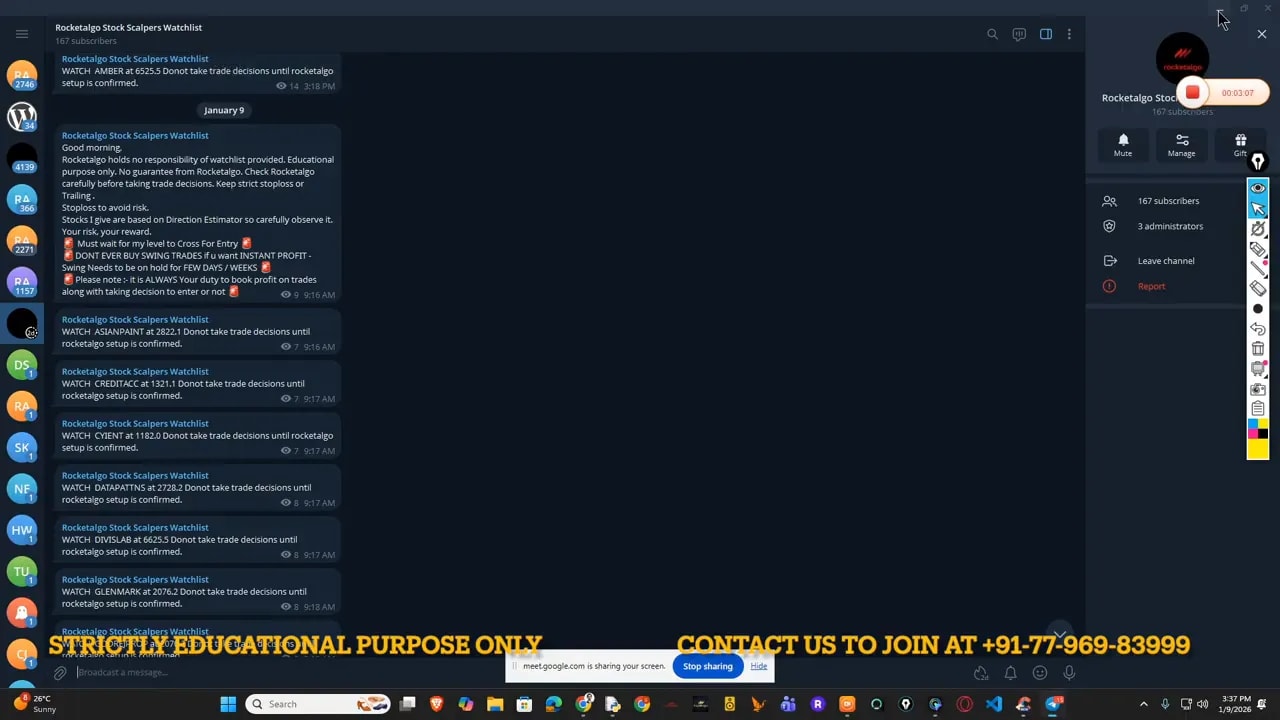
- Keep the list short: 6 to 12 names. Too many symbols dilute focus and increase execution errors.
⚙️ Entry rules: a simple, high-probability framework
Simplicity improves execution. Follow these rules rather than loading multiple indicators.
- Confirm market state: check Nifty and Bank Nifty. If they trend, favor trades in that direction. If they are sideways, consider switching strategy to option selling or staying out. trading, stock market, NSE, BSE, Nifty
- Wait for institutional-like flow: avoid taking a fresh breakout if volume and wider-market participation are absent. If institutions are not present, the scanner should gray the setup out.
- Prefer intraday structure: trade pullbacks to short-term support within a trend, or clean breakouts with follow-through within the first 90 minutes of the session.
- Define risk: set stop loss based on structure (previous swing high/low or ATR multiples) and position size so that a losing trade costs only a small percentage of capital.
- Plan partial profit booking: take partial profits at logical levels and let a portion ride with a trailing stop.
📈 Managing trades and profit-booking logic
One of the most overlooked skills is knowing when to let a trade go and when to book profits. Follow these practical rules:
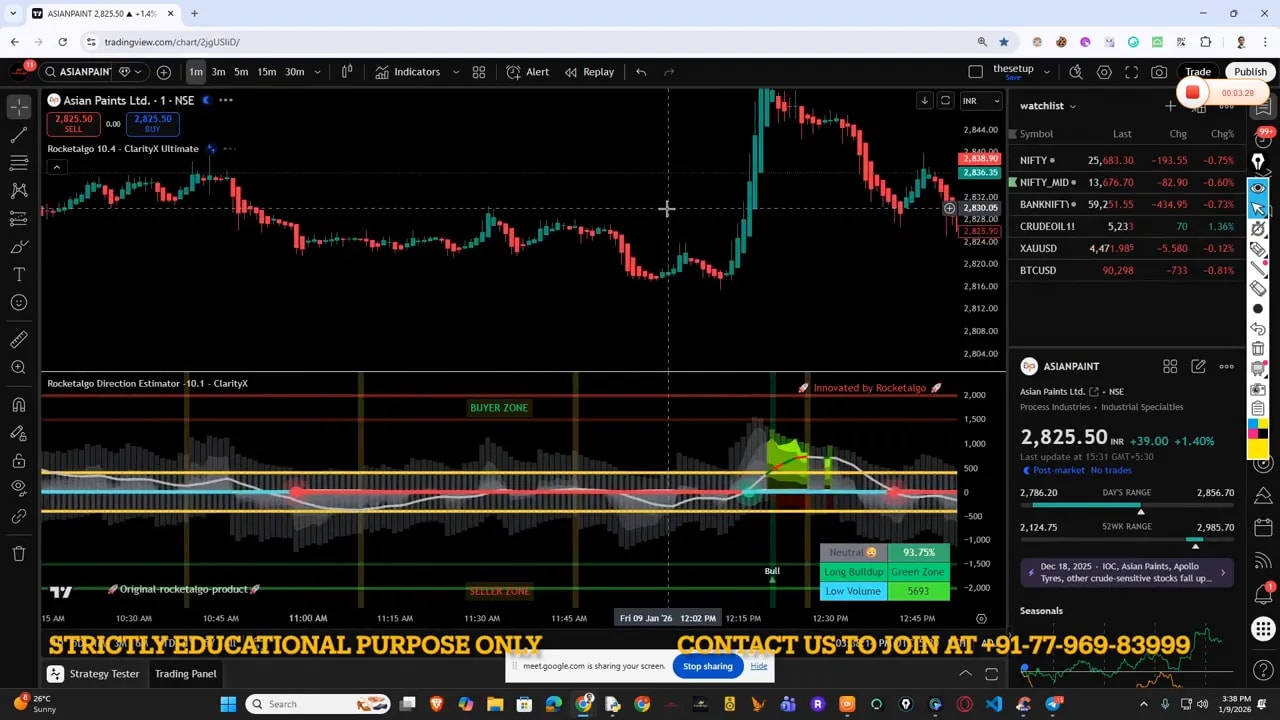
- Use predefined booking zones: partition targets into 2–3 levels. Book a fraction at the first level, another fraction at the second, and trail the rest.
- Respect profit-booking signals: when the scanner or your process indicates a profit-booking stage on a stock, treat it as a likely short-term reversal and avoid initiating opposite-direction trades immediately. trading, stock market, NSE, BSE, Nifty
- Move stops to breakeven once initial target is reached to protect capital.
- Avoid revenge trades: if a trade turns against you and then recovers, do not double down without fresh confirmation.

🧠 How market state changes the approach (trending vs sideways)
Adapt your strategy quickly. Two practical rules:
- In a clear uptrend or downtrend, trade with the trend on pullbacks and breakouts. Keep entries cleaner and trades smaller when volatility increases. trading, stock market, NSE, BSE, Nifty
- In a sideways market, prefer option selling strategies, volatility-based income trades, or step aside. Sideways action often causes both buyers and sellers to give up profits quickly, creating chop and whipsaw.
📊 Practical example: from watchlist to executed trade
Example workflow using an index-weighted stock:
- Pre-market: add the stock to the watchlist because it gapped up on strong volume.
- First 30 minutes: observe whether Nifty confirms direction. If Nifty trends higher, bias long; if it fails, bias short or stay flat.
- Entry: buy on a pullback to the session VWAP or a short-term moving average with rising volume and a stop below the last swing low.
- Targets: book 50% at 10–15 points, trail remaining with a 1x ATR stop.
- Exit: if the instrument enters a profit-booking zone indicated by your process, close remaining position and mark setup as paused for the day. trading, stock market, NSE, BSE, Nifty
⚠️ Common mistakes and how to avoid them
Here are the frequent errors that wreck intraday performance and practical fixes.
- Chasing early entries: fix by waiting for confirmation on a lower timeframe and setting mechanical entry rules.
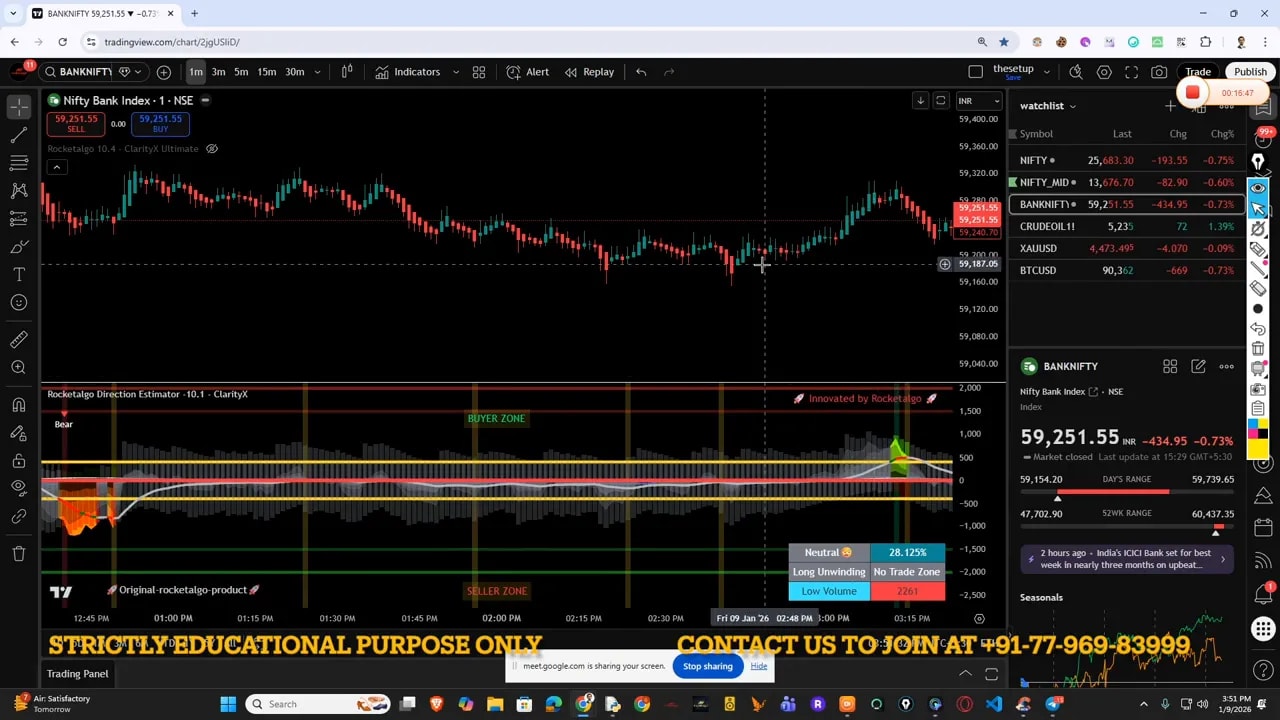
- Trading during indistinct market states: when the market is sideways, reduce activity or switch to option selling. Sideways sessions increase false breakouts. trading, stock market, NSE, BSE, Nifty
- Ignoring liquidity: low-liquidity names can be manipulated and have wide spreads—avoid them for intraday trades.
- No written review: record each trade and the mistake (late entry, wrong stop, position sizing). Review daily and limit repeating the same error.
- Overtrading: if you miss a setup, do not force alternative trades. Stick to your watchlist and patience-based entry rules.
🛠️ Checklist: pre-market and live-session routine
Use this short checklist before you place any intraday trades:
- Open Nifty and Bank Nifty charts to confirm market state.
- Review watchlist; gray-out choppy symbols.
- Set alerts on selected setups and prepare orders with stops and target levels.
- Confirm position size with fixed risk per trade (for example 0.5–1% of capital).
- Log trades and note the reason and exact entry trigger for later review. trading, stock market, NSE, BSE, Nifty
✅ Example risk management formula
Simple position sizing method:
Risk per trade = Account size × Risk percentage (e.g., 0.5%)
Stop distance = Entry price − Stop price (in points)
Position size = Risk per trade ÷ (Stop distance × point value)
This ensures consistent monetary risk across trades and prevents catastrophic drawdown. trading, stock market, NSE, BSE, Nifty
🔁 Practice, consistency, and what to track every day
Consistency beats complexity. Track this daily:
- Number of setups taken vs setups missed
- Win rate and average reward-to-risk ratio
- Common entry errors (e.g., early entry, position sizing mistakes)
- Which market states produced the best results
Write these in a small trading notebook and review weekly. Iterative improvement is the fastest route to profitability. trading, stock market, NSE, BSE, Nifty
🧾 Practical rules summary (cheat sheet)
- Rule 1: Only trade setups on your watchlist that meet volume and market-state filters.
- Rule 2: Do not initiate new trend trades in a grayed-out profit-booking stage.
- Rule 3: Use mechanical stops and preplanned partial exits.
- Rule 4: Switch to option-selling or skip trading when the market is sideways.
- Rule 5: Keep a short watchlist and focus on execution over prediction. trading, stock market, NSE, BSE, Nifty
📌 Practical examples and mini case studies
Case study 1: A heavyweight stock gave a morning breakout at 09:16 with institutional volume. The entry at the breakout, stop below the breakout bar, and partial booking at the first target produced a clean 20–30 point intraday gain. The watchlist captured the symbol because it met pre-session liquidity rules. trading, stock market, NSE, BSE, Nifty
Case study 2: A stock in the same sector showed profit-booking behavior on the scanner. The correct response was to avoid fresh longs and monitor for a reset. A user who respected the signal avoided a losing reversal during mid-session churn.
📚 Further reading and tools
Useful resources to complement this system:
- Real-time scanners that allow you to gray-out setups when institutional flow is absent.
- Volume and order-flow tools for confirmation on breakouts.
- Journaling templates for trade review and error tracking.
❓FAQ
How do I know whether to trade Nifty or individual stocks today?
Check the market state on Nifty and Bank Nifty first. If both show trending behavior and volume confirmation, bias the direction on individual stocks that are sector leaders. If indices are choppy or sideways, avoid directional trades and consider option-selling or staying out. trading, stock market, NSE, BSE, Nifty
What should I do when a setup is gray-out by my scanner?
Gray-out indicates a lack of institutional participation or a profit-booking stage. Do not take fresh trades in that instrument until a clear reset or renewed volume confirms interest. trading, stock market, NSE, BSE, Nifty
Is it better to trade many stocks or specialize in a few?
Specializing in a smaller universe improves pattern recognition and execution. Limit your intraday watchlist to 6–12 names and master their behavior. If you trade multiple asset classes, maintain separate focused watchlists. trading, stock market, NSE, BSE, Nifty
How much capital do I need to start intraday trading on NSE and BSE?
There is no fixed amount, but capital should support sensible position sizing and absorb a sequence of losses. Many intraday traders begin with a modest account and scale up after demonstrating consistent edge and risk control. trading, stock market, NSE, BSE, Nifty
🧾 Final takeaway
Focus on a short, liquid watchlist, follow mechanical entry and exit rules, respect market state, and track your mistakes. When the market signals profit-booking or low institutional participation, the correct reaction is to pause or gray-out the instrument rather than force trades. Consistent practice, accurate journaling, and disciplined risk control are the pillars of reliable intraday performance on the NSE and BSE while trading Nifty-related instruments. trading, stock market, NSE, BSE, Nifty
Need more help |
|
Contact us by clicking the button below |
| Click me |


