
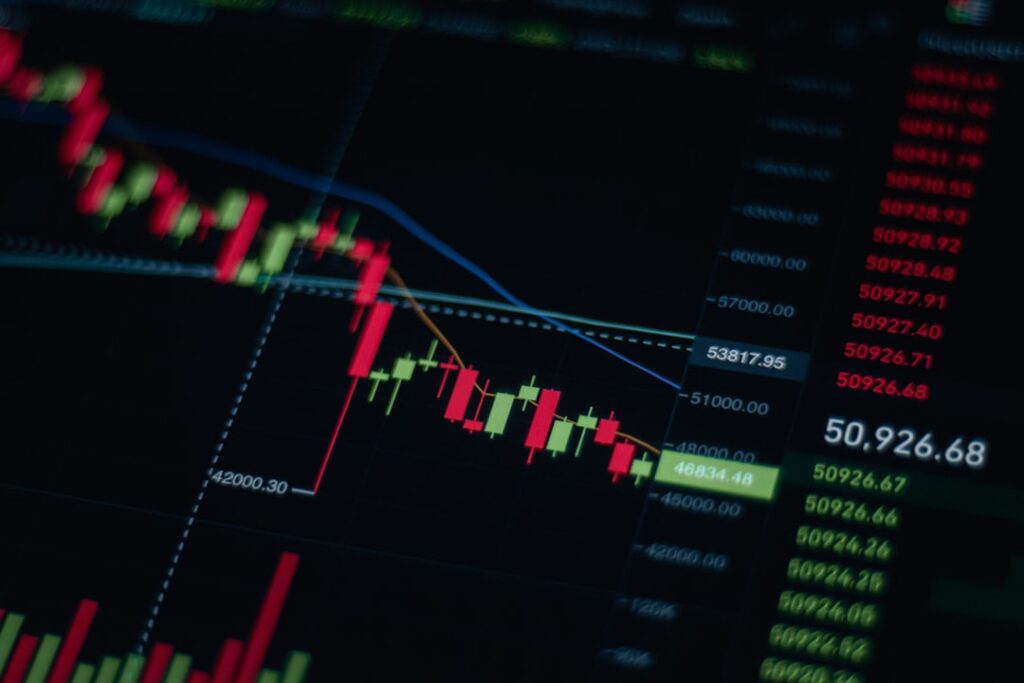
Welcome, aspiring market maestros, to a dive into the captivating world of algorithmic trading! As a leadership coach, my mission is to empower you to navigate complex landscapes with clarity and confidence. Today, we’re dissecting a force that has reshaped financial markets and, in 2026, has truly democratized access for the individual trader. No longer an exclusive playground for institutional giants, algorithmic trading now beckons to those with curiosity and a strategic mindset.
For too long, the image of “algos” has been shrouded in a mist of complexity, reserved for quants with advanced degrees and proprietary systems. But what if I told you that by 2026, the essential tools and knowledge are within your reach? This guide is designed to demystify algorithmic trading, offering a clear roadmap for beginners to understand its principles, harness its power, and mitigate its inherent risks.
The Rise of the Machines: Understanding Algorithmic Trading in 2026
At its core, algorithmic trading – often abbreviated as “algo trading” or “black-box trading” – is the use of computer programs to execute trades based on a predefined set of rules. Think of it as automating your trading decisions, removing human emotion, and leveraging the speed and precision of machines.
What Exactly is Algorithmic Trading?
It’s more than just a fancy way to buy and sell. It’s a systematic approach where a computer follows specific instructions to monitor market conditions and automatically place orders. These instructions, or algorithms, can be as simple as “buy when the price crosses above the 50-day moving average” to highly complex models incorporating statistical analysis, machine learning, and artificial intelligence.
The Market’s Silent Driver: Its Impact on 2026 Markets
The numbers speak for themselves. Algorithmic trading accounts for a staggering 60-75% – and some estimates even push it up to 80% – of equity trading volume in developed markets. This isn’t just a niche strategy; it is the market in many respects. From high-frequency trading (HFT) firms making thousands of trades per second to pension funds managing enormous portfolios, algos are the engines driving market liquidity and price discovery. Understanding how these algorithms operate, even at a fundamental level, offers an invaluable perspective on market dynamics.
For those interested in delving deeper into the world of algorithmic trading, a related article that provides valuable insights is titled “Expert Mode Nifty Trade Rules,” which can be found at this link. This article offers practical strategies and rules for trading in the Nifty market, making it a great complement to the foundational knowledge presented in “What Is Algorithmic Trading? A 2026 Beginner’s Guide.” By exploring both resources, beginners can gain a more comprehensive understanding of how to navigate the complexities of algorithmic trading effectively.
From Wall Street to Your Desktop: Democratizing Algo Trading
The narrative surrounding algorithmic trading has undergone a significant transformation. What was once the exclusive domain of large financial institutions and hedge funds, guarded by proprietary software and enormous infrastructure, has now become accessible to the everyday investor.
The Accessibility Revolution: No-Code & User-Friendly Platforms
The year 2026 marks a pivotal moment in this accessibility revolution. The barriers to entry have dramatically collapsed. You no longer need to be a coding guru with a degree in computer science to dip your toes into algo trading. Platforms like TradingView have integrated powerful scripting languages like Pine Script, allowing users to backtest and automate strategies with relative ease. Beyond that, the emergence of genuinely no-code options is a game-changer. Platforms and guides are now emphasizing simple, three-step plans that explicitly discourage beginners from diving into Python immediately. Tools like Nurp’s Intelligent Trader and a growing ecosystem of easy-to-use software and brokers are making the dream of automated trading a reality for anyone with a strategic mind and a willingness to learn.
Essential Tools for the Aspiring Algo Trader
While the advanced institutional setups remain complex, the basic toolkit for a beginner in 2026 is surprisingly manageable:
- Trading Platforms with Automation Features: Think TradingView, MetaTrader 4/5, or brokers offering integrated algorithmic capabilities.
- Scripting Languages (Optional but Recommended): Pine Script (for TradingView) is an excellent starting point for those who want to build custom indicators and simple strategies. Python, while initially discouraged for absolute beginners by some 2026 guides, remains the industry standard for more advanced strategies and data analysis once you gain experience.
- Backtesting Software: Integrated into most platforms, these allow you to test your strategy against historical data.
- Paper Trading/Demo Accounts: Crucial for testing strategies in real-time market conditions without risking actual capital.
Deconstructing the Algo: Core Components of a Trading Strategy
Every successful algorithmic trading strategy, regardless of its complexity, is built upon a few fundamental pillars. Understanding these components is key to constructing robust and effective automated systems.
Signal Generation: The “When to Trade”
This is where your algorithm decides when to enter or exit a trade. Signals are the actionable insights derived from market data.
- Technical Indicators: These are mathematical calculations based on historical price, volume, or open interest data. Examples include Moving Averages (MA), Relative Strength Index (RSI), Bollinger Bands, and MACD. An algorithm might, for instance, generate a buy signal when the 50-day MA crosses above the 200-day MA.
- Statistical Models: More advanced strategies might employ statistical arbitrage models, mean reversion techniques, or correlation-based strategies to identify mispricings or predictable patterns.
- Machine Learning (ML) Patterns: A rapidly evolving area, ML algorithms can identify complex, non-linear patterns in data that human traders or traditional indicators might miss. These could involve predicting price movements based on a confluence of factors, sentiment analysis from news, or identifying complex intermarket relationships.
Risk Management: The “How Much to Risk”
Perhaps the most critical, yet often overlooked, component. Without robust risk management, even the most profitable signal generation can lead to catastrophic losses.
- Position Sizing: Determining how many shares, contracts, or units of a currency pair to trade based on your total capital and risk tolerance.
- Stop-Loss Orders: Predetermined price points at which your trade will be automatically closed to limit potential losses. This is non-negotiable for automated trading.
- Take-Profit Orders: Predetermined price points at which your trade will be automatically closed to lock in profits.
- Drawdown Limits: Setting a maximum allowable percentage loss from your peak capital. If breached, the algorithm might pause trading or be shut down.
- Diversification: Spreading risk across multiple assets, markets, or strategies to reduce exposure to any single point of failure.
Execution: The “Placing the Order”
Once a signal is generated and risk parameters are met, the algorithm executes the trade. This is where speed and precision truly shine.
- Order Types: Algorithms can utilize various order types like market orders, limit orders, stop orders, and more complex ice-berg or time-weighted average price (TWAP) orders to optimize execution.
- Connectivity: Robust and low-latency connections to brokerage APIs (Application Programming Interfaces) are essential for rapid and reliable trade placement.
- Across Diverse Markets: Algorithmic trading isn’t confined to a single asset class. It’s actively employed in forex, cryptocurrencies, equities, commodities, and even options and futures markets.
The Double-Edged Sword: Benefits and Risks of Automated Trading
Algorithmic trading offers compelling advantages, which is why it dominates markets. However, like any powerful tool, it comes with significant risks that beginners must understand and respect.
Unlocking the Advantages: Why Algos Rule
- Speed and Efficiency: Trades can be executed in milliseconds, far faster than any human, allowing algorithms to capitalize on fleeting market opportunities.
- 24/7 Consistency: Algorithms don’t sleep. They can monitor markets and execute trades around the clock across different time zones, capturing opportunities that human traders would miss.
- Emotion-Free Trading: One of the biggest challenges for human traders is managing emotions like fear and greed. Algos are immune, strictly adhering to their predefined rules without psychological interference.
- Accuracy and Precision: Eliminates manual errors in order placement, such as typing the wrong quantity or price.
- Cost Efficiency (Long-Term): While setup costs can be high (for institutions), for individual traders, automating repetitive tasks can reduce time spent monitoring, potentially leading to better overall cost-effectiveness.
Navigating the Perils: The Inherent Risks
- High Setup Costs & Technical Skills (Historically): While 2026 makes inroads, advanced setups still require significant investment and technical prowess. For beginners, even simpler systems require a learning curve.
- Regular Maintenance and Monitoring: Algorithms are not “set it and forget it.” Market conditions change, and algorithms need constant monitoring, optimization, and occasional recalibration.
- Technical Glitches: Bugs in code, connectivity issues, server failures – any of these can lead to incorrect trades or missed opportunities, potentially resulting in substantial losses.
- Over-Optimization (Curve Fitting): A common pitfall where a strategy performs exceptionally well on historical data but fails miserably in live trading because it’s been “tuned” too perfectly to past events, rather than capturing genuine market dynamics. Always use out-of-sample data.
- Market Shocks & Black Swan Events: Algorithms are designed for expected market behavior. Unprecedented events can cause them to behave unexpectedly or lead to rapid, significant losses if not designed with robust exception handling.
- Regulatory Changes: The 2026 landscape includes new regulations such as mandatory exchange approval for certain types of algorithms, the requirement for kill switches, and unique order IDs. Failure to comply can lead to penalties.
- High Risk and Volatility: Algorithmic trading, especially with leverage, can amplify gains and losses. The cardinal rule remains: never invest more than you can afford to lose. Most strategies, even well-intentioned ones, will fail without proper backtesting and risk management.
If you’re looking to deepen your understanding of algorithmic trading, you might find the article on forward testing strategies particularly insightful. This resource provides practical insights into how traders can effectively implement and test their algorithms in real market conditions. To explore this further, check out the article on forward testing Nifty, which complements the concepts discussed in “What Is Algorithmic Trading? A 2026 Beginner’s Guide.”
Your First Steps: A Beginner’s Roadmap to Algo Trading in 2026
So, you’re intrigued. The promise of automated, emotionless trading, amplified by 2026’s accessibility, calls to you. How do you begin this journey?
1. Education and Fundamentals: Build Your Foundation
- Market Basics: Before you automate anything, understand how markets work. Learn about asset classes (equities, forex, crypto), market orders, analysis types (technical vs. fundamental), and basic terminology.
- Coding Fundamentals (Optional for Basics, but Good for Growth): While 2026 offers no-code solutions, a basic understanding of programming logic is invaluable. If you choose to learn, Python is highly recommended for its versatility in data analysis and financial applications. Focus on data structures, control flow (if/else, loops), and functions.
- Algorithmic Trading Concepts: Study different types of strategies (mean reversion, trend following, arbitrage), common indicators, and risk management principles.
2. Choose Your Platform Wisely: Simplicity for Starters
- Start Simple: As 2026 guides emphasize, avoid complex setups initially. Opt for beginner-friendly platforms. Think TradingView with Pine Script, or brokers offering integrated, user-friendly strategy builders.
- No-Code Options: Explore the emerging suite of no-code platforms and brokers specifically designed for ease of use. These will allow you to build strategies by dragging and dropping components rather than writing lines of code. Look for platforms that prioritize transparency and offer clear explanations.
- Avoid Overwhelm: Don’t get caught up in expensive, overly complex software from the outset. Your goal is to learn the principles, not get bogged down in technical minutiae.
3. Develop & Backtest Simple Strategies
- Begin with Basics: Don’t aim for the next multi-million dollar HFT strategy. Start with incredibly simple, well-understood concepts. A classic example is a moving average crossover strategy: “Buy when the 50-period moving average crosses above the 200-period moving average; Sell when it crosses below.”
- Backtest Rigorously: Use historical data to see how your strategy would have performed. Pay attention not just to profit, but also to metrics like maximum drawdown, profit factor, win rate, and average trade size. This is crucial for identifying potential flaws.
- Paper Trade (Demo Account): Once your backtests look promising, run your strategy on a demo account with simulated money. This is the closest you’ll get to live trading without risking real capital, allowing you to observe its performance in real-time market conditions.
4. Master Risk Management: Your Shield Against Loss
- Implement Stop-Losses: Every single trade your algorithm makes must have a defined stop-loss.
- Position Sizing Rules: Never risk more than a small percentage of your capital on any single trade (e.g., 1-2%).
- Understand Drawdowns: Be prepared for periods where your strategy loses money. Ensure your capital can withstand these drawdowns without being wiped out.
- Focus on Risk-Reward Ratios: Aim for strategies where the potential profit (reward) is significantly greater than the potential loss (risk) for each trade.
5. Start Small, Learn Continuously
- Real Money, Small Amounts: Once you’re confident after extensive backtesting and paper trading, start with a very small amount of real capital – an amount you are entirely comfortable losing. This transition will highlight emotional responses you didn’t experience with simulated money.
- Monitor and Adapt: Markets evolve. Regularly review your algorithm’s performance. Is it still performing as expected? Are there new patterns emerging? Be prepared to pause, tweak, or even retire a strategy if it’s no longer effective.
- Join Communities: Engage with other algorithmic traders online. Forums, subreddits, and specific platform communities can be invaluable sources of knowledge, support, and shared insights.
Algorithmic trading in 2026 is an incredible frontier for individuals. It offers unparalleled potential for efficiency and discipline in your trading endeavors. But remember, the power it bestows is directly proportional to the responsibility you must shoulder. Approach it with curiosity, diligence, and unwavering respect for risk, and you’ll be well on your way to becoming a skilled, strategic, and successful algorithmic trader. Good luck!
FAQs
What is algorithmic trading?
Algorithmic trading is a method of executing orders using automated pre-programmed trading instructions, accounting for variables such as time, price, and volume. It involves using computer algorithms to make trading decisions, with minimal human intervention.
How does algorithmic trading work?
Algorithmic trading works by using mathematical models and computer programs to analyze market data and execute trades. These algorithms can be designed to follow specific trading strategies, such as trend following, mean reversion, or market-making.
What are the benefits of algorithmic trading?
Some benefits of algorithmic trading include the ability to execute trades at the best possible prices, reduced transaction costs, increased speed of trade execution, and the ability to backtest and optimize trading strategies.
What are the risks of algorithmic trading?
Risks of algorithmic trading include the potential for technical glitches or system failures, market volatility leading to unexpected losses, and the risk of over-reliance on historical data or flawed trading models.
How can beginners get started with algorithmic trading?
Beginners can get started with algorithmic trading by learning programming languages such as Python or R, understanding market data and trading strategies, and using simulation or paper trading accounts to test their algorithms before deploying them in live markets.

