

The Unseen Battleground: Why Risk Management is Paramount for Intraday Traders in India
The allure of intraday trading is undeniable – the promise of quick profits, the thrill of the market’s pulse, and the belief that one can outsmart the crowd. However, beneath this glamorous veneer lies a brutal reality: intraday trading is a high-stakes game where risk, if left unmanaged, can decimate even the most promising trading capital. For Indian intraday traders, the landscape has evolved significantly, with regulatory bodies like SEBI continuously tightening their grip on surveillance and risk mitigation. This isn’t a punitive measure; it’s a protective one, acknowledging the inherent volatility and potential for significant losses. My years observing and participating in these markets have taught me one immutable truth: successful intraday trading isn’t about predicting every move, but about meticulously managing every risk. This article delves into the critical pillars of risk management for Indian intraday traders – stop-loss mechanisms and position sizing – emphasizing their non-negotiable role in navigating the market’s complexities.
Understanding the Indian Intraday Trading Environment
The Indian derivatives market, particularly for intraday trading, has undergone a metamorphosis driven by SEBI’s proactive measures to enhance market integrity and protect individual investors. These regulatory shifts, while sometimes perceived as restrictive, are fundamentally designed to inject a higher degree of discipline and prudence into intraday operations.
Regulatory Landscape and its Implications for Intraday Trading
SEBI’s commitment to a robust and transparent market is evident in its continuous refinements to intraday trading regulations. The most recent frameworks underscore a significant shift towards real-time oversight and stricter adherence to risk protocols. Brokers are now mandated to employ sophisticated real-time risk engines, conducting intraday position monitoring checks every 15 minutes. This is no longer a passive surveillance; it’s an active, dynamic process designed to catch potential breaches before they escalate. Furthermore, stricter random position checks throughout the trading day mean that traders must always be within their prescribed limits and risk parameters.
The tightening of intraday surveillance also extends to specific product categories. For instance, intraday position limits in index options have been reintroduced and significantly tightened. An entity can now hold a net intraday position capped at Rs 5,000 crore and a gross intraday position at Rs 10,000 crore, both calculated on a futures-equivalent basis. These caps are substantial but reflect SEBI’s intention to prevent excessive concentration of risk by individual participants.
Beyond position limits, margin and leverage rules remain notably stricter compared to earlier years. Intraday leverage is currently capped at a maximum of 5x. This means that for every rupee of capital, a trader can only take a position worth five rupees. While some might lament the reduced leverage, it forces traders to operate with a greater degree of capital backing, thereby reducing the potential for catastrophic losses from small price movements. Moreover, brokers are now subject to updated margin requirements, and there are stricter rules regarding the delayed reuse or withdrawal of intraday profits, ensuring that capital remains within the trading ecosystem for a reasonable period. These measures collectively aim to curb excessive speculation and encourage more prudent trading practices.
The Inescapable Reality of Market Volatility
Another crucial factor for Indian intraday traders is the inherent volatility of the market. Recently, the India VIX, a key indicator of market expectation of volatility, has seen a sharp increase, signaling larger expected intraday swings. Elevated volatility is a double-edged sword: it presents opportunities for quick profits but also amplifies the risk of rapid and significant losses. In such an environment, the importance of robust risk management strategies becomes even more pronounced. A market with high volatility demands tighter stops and smaller position sizes to prevent a single adverse move from wiping out a substantial portion of trading capital. My experience has repeatedly shown that ignoring volatility signals is a recipe for disaster, especially for intraday participants.
Adding to this, SEBI’s latest study on F&O traders provides a sobering context. While there was a slight reduction in losses for individual F&O traders in FY26 compared to FY25, the overarching trend still indicated heavy losses. This data is a stark reminder of why stop-loss discipline and meticulous position sizing are not just good practices but essential survival tools in the highly competitive and often unforgiving world of derivatives trading. The market doesn’t care about your aspirations; it only responds to price action, and without proper risk controls, even the most astute analysis can be rendered futile.
For intraday traders in India, understanding risk management is crucial to achieving long-term success in the volatile market. A related article that delves deeper into effective strategies for managing risk is titled “Risk Management Strategies for Trading in NSE and BSE,” which can be found at this link. This article provides valuable insights on stop-loss techniques and position sizing, essential components that can help traders minimize losses and maximize gains in their trading endeavors.
The Indispensable Role of Stop-Loss Orders

At the core of all prudent intraday risk management lies the stop-loss order. It is the sentinel guarding your capital, a pre-defined exit point that limits potential losses on a trade. Without a clearly established and strictly adhered-to stop-loss, an intraday trade quickly transforms from a calculated risk into an uncontrolled gamble. Recent guidance from various market authorities and seasoned traders consistently emphasizes the necessity for traders to predefine a maximum loss per trade and per day, and then to diligently execute an exit, either automatically or manually, when that level is hit.
Defining Your Stop-Loss Strategy
A stop-loss is not a static concept; it’s a dynamic tool that needs to be tailored to your trading strategy, market conditions, and individual risk tolerance. The process begins before you even enter a trade.
Pre-defining Maximum Loss Per Trade and Per Day
Before initiating any intraday trade, a trader must answer two fundamental questions: “How much am I willing to lose on this specific trade?” and “What is the maximum amount I am willing to lose in total for the entire trading day?” The first question defines your individual trade stop-loss. This level should be based on your technical analysis, support/resistance levels, chart patterns, or indicators that invalidate your trade premise. It’s not an arbitrary number; it’s the point at which your initial reason for entering the trade is no longer valid.
The second question, the maximum daily loss, is equally critical. Even with tight per-trade stop-losses, a series of small losses can accumulate quickly. Setting a daily maximum loss – for example, 2% or 3% of your trading capital – ensures that you don’t chase losses or succumb to emotional decisions after a string of bad trades. Once this daily limit is hit, the trading day is over, regardless of how promising other opportunities might appear. This discipline prevents a few unfortunate trades from spiraling into a significant drawdown.
Types of Stop-Loss Orders
While the concept of a stop-loss is simple, its implementation can vary. The most common types include:
- Market Stop-Loss: This is an order to sell (or buy to cover) at the best available market price once the stop-loss price is triggered. While it guarantees an exit, it doesn’t guarantee the exact price, especially in fast-moving, volatile markets. This can lead to “slippage,” where your actual exit price is worse than your intended stop price.
- Limit Stop-Loss: This order becomes a limit order once the stop price is triggered. For a sell stop-limit order, once the stop price is hit, a limit order is placed to sell at or above the limit price. This offers price protection but carries the risk that the order might not be filled if the market moves rapidly past your limit price.
- Trailing Stop-Loss: This is a dynamic stop-loss that adjusts as the price of the asset moves in your favor. For a long position, a trailing stop moves up with the price, maintaining a pre-defined distance below the current market price. If the price reverses and hits the trailing stop, the order is triggered. This helps lock in profits while still protecting against adverse movements.
Given the heightened volatility in the Indian market, especially with the recent rise in India VIX, traders must be acutely aware of the potential for slippage with market stop-losses. This means that while pre-defining your stop-loss is crucial, understanding the execution mechanics is equally important. Sometimes, it might be necessary to adjust your expected loss slightly to account for potential slippage, or to use limit stop-loss orders in less volatile scenarios if precise execution is paramount, accepting the risk of non-execution.
The Psychology of Stop-Loss Adherence
Perhaps the greatest challenge in stop-loss implementation is the psychological battle. It’s easy to set a stop-loss on paper, but incredibly difficult to execute when the market is moving against you, and hope whispers that it will turn around. This is where discipline becomes paramount. An effective stop-loss system removes emotion from the equation. It is an objective rule that, once triggered, demands immediate action. Delaying or moving a stop-loss is a fundamental error that almost invariably leads to larger losses. The SEBI F&O study, highlighting significant losses among individual traders, strongly reinforces the need for unwavering stop-loss discipline. The market doesn’t offer second chances to those who ignore their pre-defined risk limits.
Strategic Position Sizing for Capital Preservation
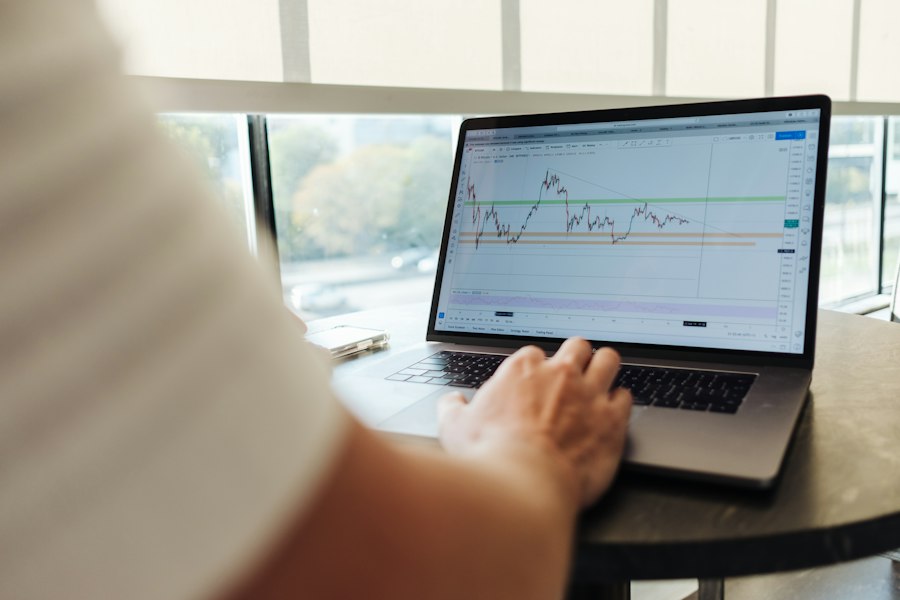
While stop-loss dictates when you exit a losing trade, position sizing dictates how much capital you expose to that loss. It is the unsung hero of risk management, often overlooked by novice traders eager to maximize their potential gains. However, professional traders understand that proper position sizing is the bedrock of capital preservation and long-term profitability. Multiple reliable sources consistently reiterate the golden rule: risk only 1% to 2% of your total trading capital per trade. This conservative approach is not about limiting your upside; it’s about ensuring your survival through inevitable drawdowns and maintaining the financial firepower to capitalize on future opportunities.
The 1% to 2% Rule of Thumb
This rule is a cornerstone of prudent risk management. It states that for any single trade, the maximum amount of capital you should expose to potential loss is 1% to 2% of your total trading account. Let’s break down why this is so critical. If you have a trading capital of Rs 1,00,000, then your maximum loss on any single trade should be between Rs 1,000 and Rs 2,000.
Why such a small percentage? The market is inherently unpredictable. Even the best traders have losing streaks. If you risk 10% of your capital per trade, just five consecutive losing trades can wipe out half of your capital (0.9^5 = ~59%, meaning 41% lost, but if every loss is a 10% loss of remaining capital it’s significantly worse). With a 1% risk per trade, it would take an astounding 69 consecutive losses to lose half your capital (0.99^69 = ~49.9%). This illustrates the power of small, controlled losses in preserving your capital during adverse market conditions. It allows you to weather storms and stay in the game long enough for your winning trades to compensate for your losses.
Calculating Position Size Based on Stop-Loss Distance
The calculation of position size is intricately linked to your stop-loss. It’s not about how many shares you feel like buying; it’s a precise calculation based on your defined risk per trade and the distance of your stop-loss from your entry price.
The formula is straightforward:
Number of Units = (Risk Per Trade) / (Entry Price – Stop-Loss Price)
Let’s illustrate with an example:
- Total Trading Capital: Rs 1,00,000
- Risk Per Trade (1%): Rs 1,000
- Entry Price of a Stock: Rs 105
- Stop-Loss Price: Rs 100
- Distance to Stop-Loss: Rs 5 (105 – 100)
Using the formula:
Number of Units = Rs 1,000 / Rs 5 = 200 Shares
So, in this scenario, you would buy 200 shares. If the trade goes against you and hits your stop-loss at Rs 100, your total loss will be (105 – 100) * 200 = Rs 1,000, which is exactly 1% of your capital.
This method ensures that no matter how volatile the stock or how wide your stop-loss needs to be (based on technical analysis), your actual capital at risk remains constant and within your acceptable limits. If the distance to the stop-loss is larger, you simply trade fewer units, and vice-versa. This is particularly crucial in current market conditions where elevated volatility (as indicated by India VIX) might necessitate wider stop-losses for certain instruments to avoid being whipsawed out of trades prematurely. In such cases, a wider stop must be accompanied by a smaller position size to keep the capital risk constant.
Adjusting for Volatility and Leverage
The current market environment, characterized by elevated volatility and SEBI’s stricter leverage rules (capped at 5x for intraday), makes proper position sizing even more critical.
When volatility is high, prices can swing wildly, making it challenging to place tight stops without getting stopped out prematurely. If your analysis demands a wider stop-loss to accommodate market noise, your position size must shrink proportionally to maintain your 1% to 2% risk per trade. Failing to adjust position size in volatile markets is a common mistake that leads to outsized losses.
Furthermore, with leverage capped at 5x, traders cannot simply take on larger positions indiscriminately. The leverage only allows for a larger notional position, but the actual capital at risk still needs to adhere to the 1-2% rule. For instance, if you’re trading a derivative product with significant leverage, and the contract value is Rs 1,00,000, but your stop-loss implies a Rs 500 risk, you might only be able to trade 2 contracts if your capital allows for a Rs 1,000 risk, even if the leverage permits more. The focus should always be on the capital at risk, not the notional value of the position.
Integrating Stop-Loss and Position Sizing for Robust Risk Control
The true power of risk management emerges when stop-loss and position sizing are not viewed as independent tools but as interconnected components of a cohesive strategy. They work in tandem to create a robust defense against market uncertainties. Understanding how they complement each other is fundamental to long-term survival and profitability as an intraday trader in India.
The Symbiotic Relationship
Think of your stop-loss as defining the “depth” of your potential loss on a single unit, and your position size as defining the “quantity” of units you expose to that depth. If the stop-loss depth increases (due to higher volatility or a wider technical invalidation point), then the quantity (position size) must decrease to keep the total capital at risk constant. Conversely, if the stop-loss can be very tight, you can increase your position size slightly while still adhering to your 1-2% capital risk rule.
This relationship is crucial for consistency. It means that your financial exposure to loss is always managed, regardless of the instrument’s price or volatility. This prevents the emotional rollercoaster that often accompanies inconsistent risk management, where a trader might take a small position on a high-conviction trade and a massive, poorly sized position on a speculative whim.
Practical Implementation for Intraday Traders
For an intraday trader in India, integrating these principles requires a systematic approach to every trade:
- Define Daily Risk Limit: Before the market even opens, decide your absolute maximum acceptable loss for the entire day (e.g., 2% of capital). If this limit is hit, stop trading immediately.
- Identify Trade Setup and Entry: Based on your analysis, pinpoint a high-probability trade setup and your intended entry point.
- Determine Stop-Loss Level: Crucially, before entering, identify the precise price level where your trade idea is invalidated. This becomes your stop-loss. This level should be based on technical analysis (support/resistance, moving averages, pivot points, etc.), not an arbitrary number.
- Calculate Risk Per Share/Contract: Subtract your stop-loss price from your entry price (or vice-versa for short trades) to get the potential loss per share/contract.
- Calculate Position Size: Use the formula:
Number of Units = (Risk Per Trade, e.g., 1% of Capital) / (Risk Per Share/Contract). This gives you the maximum number of shares or contracts you can trade for that specific setup while adhering to your 1-2% risk rule. - Place Order with Stop-Loss: Execute your entry order and immediately place a corresponding stop-loss order. Many platforms allow for OCO (One Cancels Other) orders or bracket orders, which automate this process by simultaneously placing a stop-loss and a target order along with your entry. This is highly recommended for intraday traders to ensure rapid execution and adherence to pre-defined risk parameters.
- Monitor and Adjust (within rules): Monitor the trade. If it moves in your favor, consider trailing your stop-loss to protect profits. If it approaches your stop, be prepared to accept the loss without hesitation. Never move your stop-loss further away from your entry point.
SEBI’s increased surveillance, with real-time risk engines and 15-minute position monitoring, fundamentally supports this systematic approach. Brokers are essentially acting as a second layer of defense, ensuring that traders are operating within established risk parameters. While this might feel restrictive, it ultimately benefits the disciplined trader by preventing catastrophic errors. The discipline of predefining risk and calculating position size accurately helps traders stay compliant with these stricter regulations, which also include tighter intraday position limits in index options (Rs 5,000 Cr net, Rs 10,000 Cr gross futures-equivalent basis).
In the realm of intraday trading in India, effective risk management strategies are crucial for success, particularly when it comes to implementing stop-loss orders and determining appropriate position sizing. For traders looking to deepen their understanding of these concepts, a related article provides valuable insights into the importance of risk management techniques. You can explore this further in the article on important trading sessions, which discusses how to navigate market volatility and protect your investments.
Psychological Discipline and Continuous Learning
| Metric | Description | Typical Value/Range | Importance for Intraday Traders |
|---|---|---|---|
| Stop-Loss Percentage | Maximum loss allowed per trade expressed as a percentage of entry price | 0.5% – 2% | Limits downside risk and prevents large losses |
| Position Sizing (% of Capital) | Portion of total trading capital allocated to a single trade | 1% – 5% | Controls exposure and manages risk per trade |
| Risk-Reward Ratio | Ratio of potential profit to potential loss on a trade | 1:2 or higher | Ensures trades have favorable payoff compared to risk |
| Maximum Daily Loss Limit | Maximum total loss allowed in a single trading day | 3% – 5% of capital | Prevents emotional trading and large drawdowns |
| Average Trade Duration | Typical holding time for intraday trades | Minutes to hours (within market hours) | Helps in planning stop-loss and exit strategies |
| Leverage Used | Multiplier applied to trading capital for position sizing | Up to 5x (varies by broker and instrument) | Amplifies gains and losses; requires strict risk management |
| Win Rate | Percentage of trades that are profitable | 40% – 60% | Helps evaluate effectiveness of stop-loss and sizing strategy |
Even with the most robust stop-loss and position sizing strategies, the human element remains the most significant variable in intraday trading. Emotions, biases, and a lack of discipline can quickly undermine even the most meticulously planned risk management framework. Therefore, developing psychological resilience and committing to continuous learning are as crucial as any technical tool.
Overcoming Emotional Biases
Intraday trading is a high-pressure environment that often triggers intense emotions like fear, greed, hope, and regret. These emotions are potent drivers of irrational decisions.
- Fear: Can lead to premature exits from winning trades or paralyzing inaction.
- Greed: Often manifests as over-trading, over-sizing positions, or refusing to take small losses in the hope of a turnaround.
- Hope: The insidious belief that a losing trade will eventually reverse, leading to moving stop-losses or holding on for too long, turning a small loss into a significant one.
- Regret: Can cause traders to chase lost opportunities or to double down on losing positions in an attempt to recover past losses.
The antidote to these biases is strict adherence to your pre-defined risk management plan. Your stop-loss and position sizing rules are your objective guides. When your stop-loss is hit, it’s not a personal failure; it’s the market telling you your analysis was incorrect for this specific trade. Accepting small losses as an inevitable cost of doing business is a hallmark of professional trading. Remember the SEBI F&O study – losses are common, but managing them is the key.
The Importance of a Trading Journal
A trading journal is an invaluable tool for continuous learning and self-improvement. It’s not just a record of your trades; it’s a mirror reflecting your decision-making process. For every trade, meticulously record:
- Date and Time:
- Instrument Traded:
- Entry Price and Exit Price:
- Stop-Loss Price (original and any adjustments – though adjustments should ideally be trailing, not widening):
- Position Size:
- Profit/Loss (in rupees and as a percentage of capital):
- Reason for Entry: Your initial thesis for taking the trade.
- Reason for Exit: Whether it was a stop-loss, target hit, or discretionary exit.
- Market Conditions: Overall market sentiment, volatility (e.g., India VIX level), significant news.
- Emotions Experienced: Be honest about how you felt during the trade.
- Lessons Learned: What could you have done better? What did you do well?
Reviewing your journal regularly allows you to identify patterns in your trading, both good and bad. You might discover that you consistently violate your stop-loss on certain types of setups, or that your position sizing is inconsistent. It provides objective data to refine your strategy and reinforce disciplined behavior.
Adapting to Evolving Market Conditions
The Indian market is dynamic. Regulations change, volatility fluctuates, and new trends emerge. Successful intraday traders are not static; they adapt.
- Stay Informed: Keep abreast of SEBI’s regulatory updates (like the real-time risk engines, tighter position limits, and 5x leverage cap). Understanding the rules of the game is non-negotiable.
- Monitor Volatility: Pay attention to indicators like the India VIX. High volatility implies a need for tighter stops (in relation to price swings, leading to smaller position sizes for the same capital risk) and a more cautious approach.
- Review and Refine Strategy: Periodically review your trading strategy in light of market changes and your performance data. Is your stop-loss placement still optimal? Is your position sizing too aggressive or too conservative given your current capital and market conditions?
The journey of an intraday trader is one of continuous evolution. Risk management, through diligently applied stop-loss and position sizing, provides the essential framework for navigating this journey successfully. It’s not about avoiding losses entirely, but about making them small, manageable, and temporary, ensuring that you remain in the market to seize profitable opportunities when they arise.
FAQs
What is risk management in intraday trading?
Risk management in intraday trading refers to the strategies and techniques used by traders to minimize potential losses while maximizing profits. It involves setting limits on the amount of capital at risk on each trade, using stop-loss orders, and determining appropriate position sizes based on market conditions and individual risk tolerance.
How does a stop-loss order work?
A stop-loss order is a predetermined price level set by a trader to automatically sell a security when it reaches a certain price. This helps to limit potential losses by exiting a trade before further declines occur. For intraday traders, setting an effective stop-loss is crucial to protect their capital from significant losses during volatile market movements.
What is position sizing and why is it important?
Position sizing refers to the number of shares or contracts a trader buys or sells in a trade, based on their risk management strategy. It is important because it helps traders control their exposure to risk and ensures that no single trade can significantly impact their overall trading capital. Proper position sizing allows traders to manage their risk effectively while pursuing their trading goals.
What factors should be considered when setting a stop-loss?
When setting a stop-loss, traders should consider factors such as market volatility, support and resistance levels, their risk tolerance, and the overall trading strategy. Additionally, traders should analyze historical price movements and use technical indicators to determine optimal stop-loss levels that align with their trading plan.
How can intraday traders improve their risk management strategies?
Intraday traders can improve their risk management strategies by regularly reviewing their trading performance, adjusting their stop-loss and position sizing techniques based on market conditions, and employing a disciplined approach to trading. Additionally, continuous education on market trends and risk management practices can enhance their ability to make informed decisions and reduce potential losses.

