

The Nifty and Bank Nifty, as the flagship indices of the Indian equity market, present a dynamic and often volatile landscape for traders. With numerous participants constantly vying for an edge, the reliance on robust trading indicators becomes paramount. These tools, when wielded with expertise and a clear understanding of their strengths and limitations, can transform raw price data into actionable insights. As your dedicated stock market coach, I’ve seen firsthand how the right indicators can be the difference between a profitable trade and a missed opportunity. In this in-depth exploration, we will dissect the best trading indicators for Nifty and Bank Nifty traders, focusing on how to interpret their signals and, crucially, how to combine them for enhanced accuracy. Remember, no single indicator is a silver bullet; true mastery lies in the art of confluence.
Before we dive into specific indicators, it’s essential to grasp their fundamental role in trading strategies for indices like the Nifty and Bank Nifty. These indices represent the collective performance of a curated basket of stocks, making them sensitive to broader market sentiment, economic news, and sectoral trends.
The Psychology of Market Movement
The Nifty and Bank Nifty are not driven by algorithms alone; they are shaped by human emotion, fear, and greed. Technical indicators are, in essence, attempts to quantify these psychological undercurrents reflected in price action and trading volume.
Identifying Trends and Momentum
At their core, indicators help us identify whether a market is trending upwards, downwards, or sideways. They also measure the speed and strength of these price movements (momentum). For indices that can experience sharp and rapid shifts, discerning these nuances is critical for timing entries and exits.
Spotting Overbought and Oversold Conditions
One of the most valuable functions of indicators is to signal when a market or an asset has moved too far, too fast, potentially leading to a reversal. Recognizing overbought conditions can prompt traders to consider taking profits or avoid initiating new long positions, while oversold signals might suggest potential buying opportunities.
Enhancing Risk Management
By providing objective signals, indicators can aid in setting stop-loss orders and take-profit targets. They help traders move beyond subjective gut feelings and make more disciplined trading decisions, which is indispensable for survival in the high-stakes world of derivatives trading on Nifty and Bank Nifty futures and options.
For traders looking to enhance their strategies in the Nifty and Bank Nifty markets, understanding the best trading indicators is crucial. A related article that delves into effective trading setups is available at Stock Market Trading Using RocketAlgo Setup. This resource provides valuable insights and methodologies that can complement the use of trading indicators, helping traders make more informed decisions in their trading endeavors.
The Pillars of Analysis: Momentum Oscillators for Nifty and Bank Nifty
Momentum oscillators are a cornerstone of technical analysis, primarily used to gauge the speed of price changes and identify overbought or oversold conditions. For the Nifty and Bank Nifty, which are prone to swift directional moves, these indicators are invaluable.
Relative Strength Index (RSI) – The Workhorse of Momentum
The Relative Strength Index (RSI) is a widely favored momentum oscillator that measures the magnitude of recent price changes to evaluate overbought or oversold conditions. For Nifty and Bank Nifty, its consistent performance is a testament to its utility.
Interpreting RSI Readings
- Neutral to Slightly Bullish Momentum (50–73): Observing RSI values consistently in the 50–73 range for Nifty and Bank Nifty indicates a healthy, prevailing upward momentum. This range suggests that buyers are in control, but not to an excessive degree, leaving room for further upside.
- Potential Outperformance (Above 60): When the RSI breaches the 60 mark, it often signals that the index is experiencing strong buying pressure and has the potential for outperformance. For Nifty and Bank Nifty traders, this can be a strong buy cue, suggesting a trend is gaining significant traction.
- Neutral Conditions (Near 50): Readings hovering around the 50 level suggest a period of consolidation or indecision in the market. While not a strong directional signal, it’s crucial for traders to watch for breakouts from this neutral zone.
Practical Applications for Nifty and Bank Nifty
- Entry Signals: Traders often look for RSI to cross above 50 after being in oversold territory or to turn up from near 50 during an uptrend. For Nifty and Bank Nifty, a bullish crossover of the RSI above 50 following a period of consolidation can signal the beginning of a new leg up.
- Exit Signals: When RSI enters extremely overbought territory (above 70 for Nifty and Bank Nifty, sometimes even 80), it can hint at a potential reversal or a period of consolidation. Traders might consider taking profits or tightening their stop-losses.
- Divergence: A powerful, though more advanced, application is identifying divergence. If the index makes a new high but the RSI makes a lower high, it signals bearish divergence, warning of a potential downturn. Conversely, bullish divergence occurs when the index makes a lower low, but the RSI makes a higher low, indicating potential upside.
MACD (Moving Average Convergence Divergence) – Trend Confirmation and Momentum
The Moving Average Convergence Divergence (MACD) is a trend-following momentum indicator that shows the relationship between two moving averages of a security’s price. It is used to trade momentum and trend reversals. For Nifty and Bank Nifty, its clarity in trend identification is highly valued.
Understanding MACD Signals
- Strong Buy Signal (Positive Values): The presence of strong positive MACD values (e.g., 42.68, 771.30, 913.94) is a clear indication of robust bullish momentum. These numbers suggest that the faster moving average is significantly above the slower one, reinforcing an uptrend.
- MACD Line Above Signal Line: This is the fundamental buy signal of the MACD. When the MACD line crosses above the signal line, it generally confirms positive trend momentum and suggests that the upward trend is likely to continue.
Strategic Use in Nifty and Bank Nifty Trading
- Trend Identification: The MACD is excellent for confirming the direction of the trend. A MACD line consistently above the zero line indicates an uptrend, while consistently below implies a downtrend. For Nifty and Bank Nifty, this helps traders align their positions with the prevailing market sentiment.
- Entry and Exit Points: Buy signals are generated when the MACD line crosses above the signal line, and sell signals when it crosses below. Traders often seek confirmation from other indicators before acting on these signals for Nifty and Bank Nifty.
- Divergence: Similar to RSI, MACD divergence can be a potent predictor of trend reversals. Bearish divergence occurs when the index makes new highs and the MACD makes lower highs, while bullish divergence occurs when the index makes new lows and the MACD makes higher lows.
Stochastic Oscillator – Identifying Overbought/Oversold Extremes
The Stochastic Oscillator is a momentum indicator that compares a particular closing price of a security to a range of its prices over a certain period. It is used to predict future price movements. For the Nifty and Bank Nifty, it excels at pinpointing exhaustion points.
Decoding Stochastic Readings
- Overbought/Outperform Conditions (90–91): Stochastic values in the 90–91 range are a significant indicator of overbought conditions. For Nifty and Bank Nifty, this means the price is trading at the upper end of its recent range, suggesting that the upward move might be nearing its limit.
- Pairing with Stochastic RSI (~65): When the Stochastic Oscillator is in overbought territory, but the Stochastic RSI is around 65 (which is neutral to slightly bullish), it can suggest short-term bullishness persisting within an overall overbought condition. This nuanced reading can help traders avoid premature exits if momentum is still strong despite extreme readings on the main Stochastic.
Maximizing Stochastic for Index Trading
- Reversal Signals: The primary use of the Stochastic Oscillator is to identify potential reversals. When its lines cross in overbought territory, it signals a potential top, and when they cross in oversold territory, it signals a potential bottom.
- Confirmation of Trend Strength: While often used for reversals, the Stochastic can also confirm trend strength. If the Stochastic is consistently in the upper range (above 80) during an uptrend, it reinforces the bullish momentum for Nifty and Bank Nifty.
- Divergence: Stochastic divergence is also a key signal. If the index makes a higher high and the Stochastic makes a lower high, it’s a bearish divergence. Conversely, a higher low on the Stochastic with a lower low on the index is bullish divergence.
Trend Strength and Direction: Navigating Volatility with Key Indicators
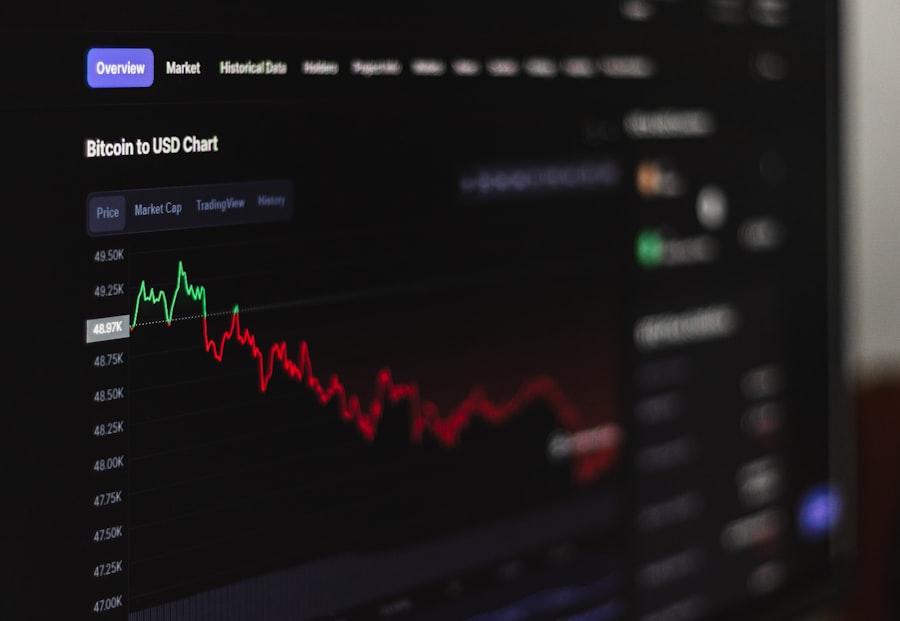
While momentum oscillators help us understand the speed of price changes, indicators focused on trend strength and direction are crucial for understanding the conviction behind those moves, especially in the often-turbulent Nifty and Bank Nifty.
Average Directional Index (ADX) – Measuring Trend Conviction
The Average Directional Index (ADX) is a unique indicator in that it measures the strength of a trend, not its direction. It is used to determine if the market is trending or in a range. For Nifty and Bank Nifty, understanding trend conviction is vital for surviving whipsaws.
Interpreting ADX Values
- Neutral to Moderate Trend Strength (21–36): ADX values within the 21–36 range suggest a developing or moderately strong trend. This is not a weak market, nor is it a runaway bull or bear market. For Nifty and Bank Nifty, this can indicate that directional moves are gaining traction, making trend-following strategies more viable.
- Outperforming Trend Strength: When ADX is noted as outperforming, it implies that the underlying directional movement is becoming more pronounced. This indicates increasing conviction in the current trend, making it more reliable for traders.
Strategic ADX Usage for Indices
- Trend Identification: A rising ADX indicates a strengthening trend, while a falling ADX suggests a weakening trend or a move towards range-bound trading. Traders use ADX to filter out trades in sideways markets and focus on periods with clear directional movement for Nifty and Bank Nifty.
- Entry Filters: Traders often prefer to enter trades when the ADX is rising and above a certain level (e.g., 20 or 25). This helps ensure that they are trading in sync with a developing trend.
- Trade Exits: When the ADX starts to fall significantly, it can signal that the trend is weakening and traders should consider exiting their positions or reducing exposure.
Commodity Channel Index (CCI) – Identifying Overbought/Oversold and Trend Strength
The Commodity Channel Index (CCI) is a versatile indicator that measures the current price level relative to an average price level over a given period. It can be used to identify overbought and oversold conditions, as well as to gauge trend strength. While originally designed for commodities, it has proven effective for indices like Nifty and Bank Nifty.
Understanding CCI Signals
- Neutral to Outperform Readings (97–99): CCI values in the 97–99 range are indicative of strong positive price momentum. This suggests that the current price is significantly above its historical average, often seen during strong uptrends. It confirms price strength relative to recent volatility bands.
- Confirmation of Price Strength: Consistently high CCI readings, especially when positive, confirm that the index is experiencing substantial buying pressure and is likely to continue its upward trajectory in the short term.
Practical CCI Applications for Nifty and Bank Nifty
- Trend Confirmation: When CCI is above +100, it suggests a strong uptrend. When it’s below -100, it indicates a strong downtrend. For Nifty and Bank Nifty, these are strong signals to trade in the direction of the trend.
- Overbought/Oversold Identification: While CCI can be used for reversals when it crosses back from extreme levels, its strength lies in confirming robust trends. However, readings significantly above +100 or below -100 can also signal future reversal potential as the index moves back towards its mean.
- Divergence: Similar to other oscillators, CCI divergence can also be a precursor to trend reversals. A divergence between the price action of Nifty or Bank Nifty and the CCI is a signal to pay close attention.
Williams %R – Detecting Overbought/Oversold Extremes
Williams %R is a momentum indicator that is highly sensitive to price changes and helps identify overbought and oversold conditions. It oscillates between 0 and -100. For Nifty and Bank Nifty, it’s another tool to gauge the market’s immediate sentiment.
Interpreting Williams %R Readings
- Neutral/Overbought Conditions (-0.87 to -13.18): Williams %R values between -0.87 and -13.18 suggest that the index is trading near its recent highs. This range indicates that the selling pressure has subsided, and the price is not oversold, often pointing to sustained bullish momentum or consolidation at elevated levels.
- Price Near Recent Highs: The readings imply that the forces of supply and demand have pushed prices towards the upper boundary of their short-term trading range. It’s a sign of price resilience rather than weakness.
Leveraging Williams %R for Index Trading
- Overbought/Oversold Signals: Readings above -20 generally indicate overbought conditions, and readings below -80 indicate oversold conditions. For Nifty and Bank Nifty, traders might look to sell when Williams %R is above -20 and rising, and buy when it’s below -80 and rising.
- Entry and Exit Strategy: Traders can use Williams %R to fine-tune entry and exit points. For example, entering a short position when Williams %R reaches extremely overbought levels and shows signs of turning down, and exiting a long position when it enters overbought territory.
Volatility and Trend Confirmation: The Role of Bollinger Bands and Rate of Change
Beyond momentum and trend strength, understanding market volatility and the rate at which prices are changing provides a more complete picture for Nifty and Bank Nifty traders.
Bollinger Bands – Gauging Volatility and Breakouts
Bollinger Bands are volatility bands placed above and below a moving average. They expand and contract as volatility increases and decreases. For Nifty and Bank Nifty, they offer dynamic support and resistance levels and can signal potential breakouts.
Understanding Bollinger Band Signals
- Bullish Momentum (Price Near or Above Upper Band): When the price of Nifty or Bank Nifty is trading near or above the upper band (e.g., Upper Band at 59,342.90), it signals strong bullish momentum. This can indicate that the market is experiencing significant buying pressure and there’s a potential for a breakout to new highs.
- Band Width: The width of the bands is an indicator of volatility. Narrow bands suggest low volatility and a potential for a significant price move (a breakout). Wide bands indicate high volatility.
Practical Band Usage for Index Trading
- Breakout Signals: Traders often watch for the price to decisively break through the upper band during an uptrend as a signal of continued momentum. For Nifty and Bank Nifty, this can precede a significant upward move.
- Reversal Signals: Conversely, when the price touches the upper band and fails to break through, it can indicate a potential reversal downwards. Similarly, touching the lower band can signal a potential upward reversal.
- Volatility Awareness: Traders use Bollinger Bands to understand the current market environment. In periods of expansion, they may adopt more aggressive strategies, while in periods of contraction, they might wait for clearer signals before committing capital.
Rate of Change (ROC) – Measuring Price Acceleration
The Rate of Change (ROC) indicator measures the percentage change in price between the current price and a price a specified number of periods ago. It essentially shows the speed of price movement. For Nifty and Bank Nifty, ROC helps confirm the vigor of a trend.
Interpreting ROC Readings
- Bullish Price Acceleration (Positive Values): Positive ROC values, such as 6.06 or 0.895, confirm that the price is increasing from one period to the next. These values indicate short-term price acceleration and robust bullish momentum for Nifty and Bank Nifty.
- Trend Strength: Sustained positive ROC values indicate a strong uptrend, while sustained negative values indicate a strong downtrend.
Strategic ROC Application for Indices
- Confirmation of Momentum: ROC works as a confirming indicator. If other indicators suggest an uptrend, a positive ROC strengthens that signal. For Nifty and Bank Nifty, this can help traders feel more confident in their directional bets.
- Early Warning of Slowdown: If the ROC starts to decline from a high positive reading, even if still positive, it might signal that the momentum is slowing down, a precursor to potential consolidation or reversal.
- Divergence: Similar to other oscillators, ROC divergence can be a warning sign. If the index makes a new high but the ROC makes a lower high, it suggests weakening upward momentum.
For traders looking to enhance their strategies, understanding the best trading indicators for Nifty and Bank Nifty is crucial. A comprehensive resource that delves into various trading techniques and insights can be found in the article on mastering trading strategies. This article provides valuable information that complements the knowledge of trading indicators, making it a great read for those aiming to improve their trading skills. You can explore it further by visiting this link.
The Power of Confluence: Combining Indicators for Robust Signals
| Indicator | Description | Advantages | Disadvantages |
|---|---|---|---|
| Simple Moving Average (SMA) | Average price over a specific period | Smooths out price fluctuations | May lag behind current price movements |
| Relative Strength Index (RSI) | Measures the speed and change of price movements | Helps identify overbought or oversold conditions | May generate false signals in ranging markets |
| Bollinger Bands | Volatility indicator using moving average and standard deviation | Shows potential reversal points | May produce false signals in low volatility markets |
| MACD (Moving Average Convergence Divergence) | Compares two moving averages to identify trend direction | Provides early signals of trend changes | May produce false signals in choppy markets |
The true art of technical analysis lies not in mastering individual indicators but in understanding how they interact and confirm each other. For Nifty and Bank Nifty traders, a well-designed confluence strategy can significantly improve accuracy and reduce false signals.
Moving Averages: The Backbone of Trend Analysis
Moving Averages (MAs) are perhaps the most fundamental of all technical indicators, smoothing out price data to identify trends. They are essential for understanding the underlying direction of Nifty and Bank Nifty.
Key Moving Averages and Their Significance
- Short-Term MAs (MA5, MA10, MA20): These shorter periods are highly responsive to price changes and are crucial for identifying short-term trends and potential trend reversals.
- Medium-Term MA (MA50): The 50-period MA provides a broader view of the trend and is often used to delineate between uptrends and downtrends.
- Long-Term MA (MA200 – Implicit): While not explicitly detailed in the provided data, the 200-period MA is a widely followed indicator for long-term trend identification, though for short-term trading, the shorter MAs are more impactful.
Trading with Moving Averages
- Trend Confirmation: When the Nifty and Bank Nifty trade above key moving averages (MA5, MA10, MA20, MA50), it confirms a strong short- to medium-term uptrend. The steeper the slope of these MAs, the stronger the trend.
- Buy/Sell Signals: Crossovers between moving averages are common signals. For instance, when MA5 crosses above MA10, it’s a short-term buy signal. When MA10 crosses above MA20, it signals a medium-term buy signal. For Nifty and Bank Nifty, the convergence of multiple MA buy signals is a powerful indication.
- Support and Resistance: Moving averages often act as dynamic support and resistance levels. Traders can use these levels to time entries and exits.
The Best Practical Combo for Nifty and Bank Nifty Traders
Based on the market data and the effectiveness of various indicators for Nifty and Bank Nifty, a highly reliable combination emerges: RSI + MACD + Moving Averages. This trio offers a comprehensive view of the market, addressing trend direction, momentum, and overbought/oversold conditions.
How the Combo Works in Harmony
- MACD Confirms Trend Direction: The MACD is your primary tool for understanding the overarching trend. When the MACD line is above the signal line and in positive territory, it tells you the broader trend is likely bullish for Nifty and Bank Nifty. This prevents traders from taking long positions against a bearish trend.
- RSI Identifies Entry/Exit Zones: Once the trend is confirmed by MACD and Moving Averages, the RSI comes into play for precise entry and exit points. Traders can look for the RSI to pull back to neutral levels (around 50–60) during an uptrend for attractive entry points, or to approach overbought territory (above 70) to consider taking profits.
- Moving Averages Validate Trend Strength: The Moving Averages act as the anchor, confirming the strength and health of the trend. If the price is consistently above key moving averages, and these averages are sloping upwards, it validates the bullish sentiment suggested by the MACD and RSI. This triple confirmation dramatically increases the probability of a successful trade in Nifty and Bank Nifty.
Example Scenario
Imagine Nifty trading with the MACD showing a bullish crossover and the MACD line above zero. The price is also comfortably above its MA5, MA10, and MA20, with these MAs sloping upwards. This establishes a strong bullish bias. Now, you observe the RSI pulling back from overbought territory (say, from 75) to around 65. This presents an opportune moment to enter a long position, as the trend is strong, momentum is confirmed, and the entry is at a technically favorable level before the RSI potentially swings back up. Conversely, if the MACD is bearish and the price is below its MAs, you would look for RSI peaks in bearish territory to consider short entries.
Conclusion: Mastering the Art of Indicator Confluence
The market for Nifty and Bank Nifty is a relentless battleground where knowledge and discipline reign supreme. By understanding the nuances of key indicators like RSI, MACD, Stochastic, ADX, CCI, Williams %R, Bollinger Bands, and Moving Averages, traders can arm themselves with powerful analytical tools. However, the true differentiator lies in the ability to synthesize these signals, seeking confluence rather than relying on isolated readings.
The combination of RSI, MACD, and Moving Averages stands out as a robust framework for Nifty and Bank Nifty traders. This powerful triad provides clarity on trend, momentum, and opportune entry/exit zones, significantly enhancing trading precision. Remember, continuous learning, disciplined execution, and a healthy respect for risk management are the cornerstones of long-term success. Go forth, analyze, and trade with conviction!
FAQs
What are trading indicators?
Trading indicators are tools used by traders to analyze market trends, identify potential entry and exit points, and make informed trading decisions. These indicators are based on mathematical calculations and historical price data.
What are the best trading indicators for Nifty and Bank Nifty traders?
Some of the best trading indicators for Nifty and Bank Nifty traders include Moving Averages, Relative Strength Index (RSI), Bollinger Bands, MACD (Moving Average Convergence Divergence), and Stochastic Oscillator. These indicators can help traders analyze price movements and make informed trading decisions.
How do trading indicators help Nifty and Bank Nifty traders?
Trading indicators help Nifty and Bank Nifty traders by providing insights into market trends, identifying potential entry and exit points, and confirming the strength of a trend. By using these indicators, traders can make more informed decisions and improve their trading strategies.
Are there any risks associated with using trading indicators?
While trading indicators can provide valuable insights, it’s important to note that they are not foolproof and can sometimes generate false signals. Traders should use indicators as part of a comprehensive trading strategy and consider other factors such as market conditions and risk management.
How can traders effectively use trading indicators for Nifty and Bank Nifty?
Traders can effectively use trading indicators for Nifty and Bank Nifty by combining multiple indicators to confirm signals, using them in conjunction with other analysis techniques, and continuously testing and adjusting their strategies based on market conditions. It’s important for traders to understand the strengths and limitations of each indicator and use them judiciously.

