

The Nifty Options arena, once largely the domain of seasoned professionals wielding complex proprietary systems, is rapidly evolving. Thanks to technological advancements and the increasing accessibility of sophisticated tools, retail traders are now equipped with the ability to harness the power of signals and algorithms. This shift, however, comes with a new layer of regulatory oversight and the expectation of structured, risk-managed approaches. As a professional stock market expert with years of navigating these turbulent waters, I’ve witnessed firsthand how automation and data-driven insights are reshaping the trading landscape. This article will delve into the intricacies of trading Nifty Options using signals and algorithms, offering a comprehensive guide for both aspiring and experienced algorithmic traders.
The world of retail algorithmic trading, particularly in the Nifty Options segment, is experiencing a fundamental transformation. What was once perceived as a Wild West of unbridled automation is now steadily moving towards a more regulated and structured environment.
SEBI’s Tightening Grip and the Path to Regulation
The Securities and Exchange Board of India (SEBI) and the National Stock Exchange (NSE) are actively working to instill greater transparency and accountability in the burgeoning retail algo trading space. This is a crucial development that all participants must acknowledge and prepare for. We are looking at a future where mandatory registration and unique identification for algorithmic strategies will become the norm. This isn’t a distant fantasy; implementation standards and phased effect dates have already been announced by SEBI. This means that merely deploying a random script won’t cut it anymore; strategies will likely need to be vetted, understood, and officially registered, ensuring a higher standard of compliance and preventing market manipulation.
Democratizing Access: Brokers and Fintechs Paving the Way
Despite the stricter regulatory environment, access to algorithmic trading for retail investors is paradoxically becoming easier thanks to the proactive efforts of brokers and fintech platforms. The current guidance provides a dual pathway for traders: you can either meticulously build your DIY strategies from the ground up, granting you ultimate customization and control, or you can leverage pre-built strategies offered by these intermediaries. This democratized access means that even those without extensive programming knowledge can participate, relying on the expertise and infrastructure provided by established financial technology companies. This dual approach caters to a wide spectrum of traders, from the highly technical to those seeking more plug-and-play solutions.
For those interested in enhancing their trading strategies, a related article that delves into the benefits of using advanced analytics is available at Boost Your Trading with RocketAlgo Analytics for Every Trader. This resource provides insights into how traders can leverage analytics to improve their decision-making processes, making it a valuable complement to understanding how to trade Nifty options using signals and algorithms.
The Foundation: Chart-Driven Signals for Nifty Options
At the heart of successful Nifty Options algorithmic trading lies robust signal generation. In today’s market, this is increasingly anchored in comprehensive chart analysis.
Beyond Basic Indicators: Deepening Chart Integration
The days of relying on a single, simplistic indicator are fading fast. Signal-based Nifty options trading is now predominantly chart-driven, incorporating a much richer set of analytical tools. Brokers like Angel One are at the forefront of this trend, offering chart-integrated signals that span not just the NIFTY 50 index itself, but also individual NIFTY 50 stocks and the BANKNIFTY index. These signals go beyond basic price movements, delving into the nuances of bullish and bearish formations, classic candlestick patterns, and intricate price action analysis across multiple timeframes. This holistic approach allows algorithms to identify high-probability setups by understanding the complete market context rather than isolated data points.
Leveraging Key Nifty Levels for Options Setups
Even with advanced algorithmic systems, fundamental market insights remain paramount. Market data consistently points to specific Nifty levels that act as crucial support and resistance zones, which are invaluable for framing options strategies. Recent derivative commentary, for instance, frequently highlights significant open interest levels. Consider the example of 25,500 Call / 25,000 Put as major open-interest levels. These concentrations of open interest indicate where market participants have placed significant bets, acting as psychological and actual barriers. Algorithmic strategies can be programmed to recognize these levels and trigger trades based on price interaction with them, for example, initiating a short call spread if Nifty approaches 25,500 with strong bearish signals, or a long put strategy if it breaks below 25,000 with corresponding bearish indications.
Algorithm Frameworks: Building Robust Trading Logic

The effectiveness of any Nifty options algorithmic strategy hinges on its underlying framework. While sophistication is increasing, fundamental principles continue to guide successful implementations.
For those interested in enhancing their trading strategies, a related article offers valuable insights into achieving success in the stock market through innovative approaches. You can explore this further in the article on unlocking stock market success, which discusses various strategies and insights that complement the techniques of trading Nifty options using signals and algorithms. This resource can provide a broader understanding of how to effectively navigate the complexities of trading.
Trend-First Approaches: The Enduring Power of Momentum
Despite the advent of complex algorithms, common algorithmic strategy frameworks remain steadfastly “trend-first.” The core idea is to identify and capitalize on prevailing market momentum. Newer algo-trading guidance consistently emphasizes robust momentum and trend detection as foundational elements. This involves using a combination of well-established technical indicators such as moving averages, which smooth out price data to reveal trend direction; the Relative Strength Index (RSI), which measures the speed and change of price movements to identify overbought or oversold conditions; and the Moving Average Convergence Divergence (MACD), which shows the relationship between two moving averages of prices. The real power comes from programming predefined buy/sell rules based on the interplay of these indicators. For instance, an algorithm might be programmed to initiate a long call option if the Nifty’s 50-day moving average crosses above its 200-day moving average, the RSI is above 60, and the MACD generates a bullish crossover. This systematic approach effectively removes emotional decision-making, which is often the downfall of human traders.
Standardized Workflows: Signal to Execution
The journey from a market insight to an automated trade execution in Nifty Options is now a highly structured process. Recent discussions around algorithmic trading workflows have cemented a standard pipeline: signal generation → options translation → programmed execution. This systematic approach is the core model underpinning virtually all automated Nifty options systems.
- Signal Generation: This is where the chart analysis, indicator readings, and price action patterns are interpreted to identify a potential trading opportunity. For example, a bullish engulfing pattern on a daily Nifty chart near a significant support level might generate a “buy” signal.
- Options Translation: Once a signal is generated, it needs to be translated into a specific options strategy. This involves determining the appropriate strike price, expiry date, and the type of option (call or put), and crucially, the structure of the trade (e.g., a bull call spread instead of a naked call). This step is where risk management considerations are integrated.
- Programmed Execution: Finally, the translated options strategy is automatically executed by the trading system. This could involve placing market orders, limit orders, or complex multi-leg orders with predefined conditions, ensuring speed and precision that human traders cannot match. This entire workflow, from initiation to execution, is designed to be streamlined and efficient, capitalizing on transient market discrepancies.
The Cutting Edge: Machine Learning and Risk Management
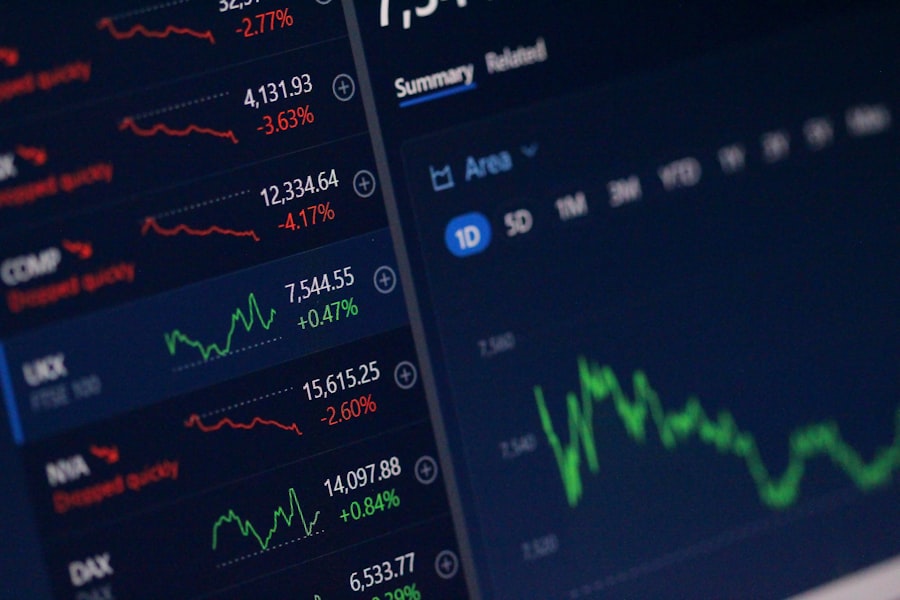
The evolution of Nifty Options algorithmic trading isn’t just about refinement; it’s also about breakthrough innovations, particularly in the realm of artificial intelligence and robust risk protocols.
Machine Learning: Unleashing Predictive Power
The potential of machine learning (ML) to enhance signal generation in Nifty Options is being explored with increasing seriousness. A forward-looking 2025 study on Nifty/Bank Nifty options highlights the growing adoption of sophisticated ML models such as XGBoost and LSTM. These models bring a new dimension to signal generation by analyzing a vast array of data points that go beyond traditional technical indicators. They can ingest and process intricate features from the option chain, including open interest and volume across various strikes, the Greeks (Delta, Gamma, Theta, Vega), implied volatility data, and a multitude of price action indicators. By learning from historical data and identifying complex, non-linear relationships, these ML models can classify buy/sell signals with a higher degree of accuracy and predictive power. Imagine an XGBoost model detecting subtle shifts in implied volatility and open interest distributions that precede a significant price movement, generating a timely options signal that a human eye might miss. This represents a significant leap forward in generating more intelligent and adaptive trading signals.
Prioritizing Risk Management: Structured Strategies over Naked Bets
While the allure of high returns from naked options trading can be tempting, seasoned professionals and market strategy guides consistently advocate for a more prudent approach. Risk-managed strategies are overwhelmingly favored over inherently riskier naked option bets, especially for retail traders. Recent beginner and market-strategy guides continue to recommend structured setups such as the Bull Call Spread and the Bear Put Spread for Nifty Options.
- A Bull Call Spread involves buying a call option at a lower strike price and simultaneously selling a call option at a higher strike price, both with the same expiry. This strategy limits potential losses if the market moves against you while still allowing for profit if your bullish outlook is correct, but with reduced maximum profit potential compared to a naked long call.
- Similarly, a Bear Put Spread involves buying a put option at a higher strike price and selling a put option at a lower strike price, again with the same expiry. This strategy is designed to profit from a moderately bearish market outlook while capping potential losses.
These defined-risk setups are crucial because they pre-determine the maximum possible loss, offering a layer of protection that naked options lack. Integrating these structured strategies into algorithmic workflows ensures that even as automation drives trading decisions, the fundamental principles of capital preservation and responsible risk-taking are upheld. Algorithms can be programmed to automatically select and execute these spreads based on generated signals, adhering to predefined risk parameters, rather than venturing into the unpredictable territory of unlimited loss potential. This blend of advanced technology with conservative risk management is the hallmark of sophisticated and sustainable Nifty options algorithmic trading.
FAQs
What are Nifty options?
Nifty options are financial derivatives that give the buyer the right, but not the obligation, to buy or sell the Nifty index at a predetermined price within a specific time period.
What are signals and algorithms in trading?
Signals are indicators or patterns in market data that suggest a potential trade opportunity. Algorithms are mathematical formulas or rules used to generate trading signals and make trading decisions.
How can signals and algorithms be used to trade Nifty options?
Signals and algorithms can be used to analyze market data, identify potential trade opportunities, and automate trading decisions in Nifty options based on predefined criteria.
What are the benefits of using signals and algorithms in Nifty options trading?
Using signals and algorithms can help traders make data-driven decisions, reduce emotional bias, automate trading processes, and potentially improve trading efficiency and performance.
What are some common signal indicators and algorithms used in Nifty options trading?
Common signal indicators and algorithms used in Nifty options trading include moving averages, relative strength index (RSI), stochastic oscillators, and various trend-following and mean-reversion strategies.

