
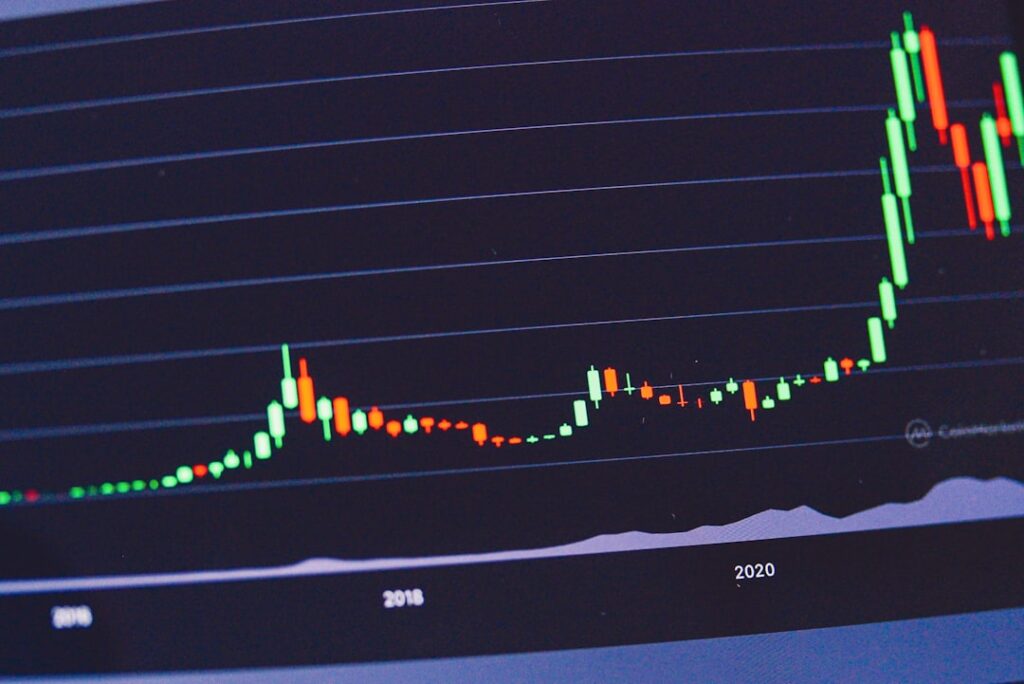
The landscape of modern finance is increasingly shaped by systematic approaches to market engagement. Rather than relying on intuition or speculative foresight, successful trading operations are grounded in a scientific methodology, designing and deploying systems that exploit verifiable market inefficiencies. This article delves into the foundational principles that enable robust, profitable trading systems, moving beyond anecdotal evidence to present a framework built on data, rigorous testing, and continuous refinement.
The Imperative of Systematic Development
The evolution of financial markets has made it clear that a structured approach is not merely advantageous but essential for sustained success. The sheer volume and velocity of information, coupled with the computational power available to market participants, demand a methodical strategy.
Quantifying Success in System Creation
Developing profitable automated trading systems remains a significant challenge, yet one with demonstrable rewards for those who apply rigorous methods. Recent data highlights this reality: out of 75 initial strategies, 56 passed simulation tests, with 25 (45%) ultimately proving profitable post-deployment. This success rate, while not universal, underscores an important principle: profitability often stems from asymmetric returns, where the gains from winning trades significantly outweigh the losses from losing ones, leading to net positive overall performance. This necessitates systems engineered not just for winning trades, but for maximizing the impact of those wins while prudently managing losses.
The Rise of Algorithmic Dominance
The trajectory towards automation in trading is unequivocal. Projections suggest that over 70% of trades on top exchanges will leverage algorithmic and AI systems by 2025. This shift is powered by sophisticated tools such as machine learning, sentiment analysis, and deep reinforcement learning. These technologies empower strategies ranging from high-frequency trading (HFT) and robo-trading to mean reversion and scalping, enabling faster execution, higher volumes, and the efficient management of complex portfolios. The increasing complexity and interconnectedness of global markets make human-only intervention progressively less competitive.
In exploring the intricacies of profitable trading systems, one can gain valuable insights from the article on live momentum setups. This piece delves into the practical applications of trading strategies and how they can be effectively implemented in real-time scenarios. For a deeper understanding of how momentum can influence trading decisions and enhance profitability, you can read more in the article available at Live Momentum Setups.
The Pillars of Scientific Validation
At the core of any profitable trading system lies a commitment to scientific validation. This involves transitioning from hypotheses to empirically proven edges.
Data-Driven Backtesting and Forward Testing
The rigorous testing of trading ideas against historical data is paramount. A comprehensive encyclopedia of backtested strategies, updated regularly, highlights the existence of over 200 free strategies, including those leveraging volatility plays (which exhibit profitability even in bear markets) and specific candlestick patterns like the Bullish Engulfing. The emphasis on data-driven backtesting for identifying genuine edges cannot be overstated. However, backtesting alone is insufficient. It must be complemented by forward testing, where systems are deployed in a live, albeit typically simulated or small-capital, environment to assess their performance under real-time market conditions. This two-phase testing process helps to mitigate the risks of overfitting and ensures that discovered edges are not merely artifacts of historical data.
The Power of Pattern Recognition and Market Rhythms
Scientific validation extends to the understanding that inherent market patterns do exist and can be exploited. Analysis of over 6,200 blackbox systems via scientific method confirms that some market patterns are consistently effective. These patterns are frequently driven by predictable human psychology embedded in trading behavior and observable seasonal rhythms. For instance, the Opening Range Breakout (ORB) strategy applied to the QQQ ETF has demonstrated a 33% annualized alpha (net of commissions) from 2016-2023, outperforming a simple buy-and-hold strategy, particularly when amplified with 3x leveraged ETFs like TQQQ. Identifying and systematically exploiting such recurring patterns forms the bedrock of robust system development.
Embracing Advanced Technologies
The frontier of profitable trading systems is continually pushed forward by technological advancements, particularly in artificial intelligence and automation.
Machine Learning for Predictive Modeling
Machine learning algorithms are transforming how trading systems analyze data and make decisions. Techniques such as supervised learning can be used to predict price movements or identify optimal entry and exit points based on vast datasets of historical market conditions. Unsupervised learning, on the other hand, can discover hidden patterns and relationships within data that human analysts might miss. Reinforcement learning, a particularly powerful paradigm, enables systems to learn optimal trading strategies through trial and error, adapting and improving their performance over time in dynamic market environments. The ability of these algorithms to process and interpret complex, high-dimensional data sets far exceeds human capacity, providing a significant informational edge.
Sentiment Analysis and Alternative Data Integration
Beyond traditional price and volume data, modern trading systems increasingly incorporate alternative data sources. Sentiment analysis, for example, processes vast amounts of textual data from news articles, social media, and corporate reports to gauge market psychological states. Positive or negative sentiment can be a predictive indicator, influencing price movements. Integrating this with other alternative data – such as satellite imagery for retail foot traffic, shipping data for supply chain insights, or anonymized transaction data – provides a holistic view of market dynamics that traditional analysis often overlooks. This multi-faceted data approach creates a richer context for decision-making, allowing systems to capture nuances that contribute to profitability.
Strategic Implementation and Execution
A well-designed system is only as effective as its implementation and execution. This involves careful consideration of the operational aspects of trading.
High-Frequency Trading (HFT) and Low Latency Infrastructure
For strategies requiring rapid execution, such as HFT and scalping, a low-latency infrastructure is critical. This involves co-locating servers near exchange matching engines, optimizing network paths, and utilizing specialized hardware to minimize the time between receiving market data and sending an order. The pursuit of speed is a significant competitive differentiator in certain market segments, where milliseconds can translate into substantial profits or losses. Firms deploying these strategies invest heavily in technological infrastructure and continuous optimization to maintain their edge. This extreme pursuit of speed is not applicable to all strategies, but for those where it is a factor, it is a non-negotiable component of profitability.
Robust Risk Management Frameworks
No systematic trading strategy is complete without a robust risk management framework. This encompasses several critical elements: appropriate position sizing to ensure no single trade can unduly impact the portfolio; stop-loss mechanisms to limit potential losses on individual trades; and diversification across multiple uncorrelated strategies and asset classes to mitigate systemic risk. It is also crucial to manage exposure to various market factors and ensure that the leverage employed is commensurate with the system’s volatility and the capital available. The focus is always on capital preservation first, then profit generation. An edge is only sustainable if the capital base remains intact through periods of drawdown.
In exploring the intricacies of profitable trading systems, it is essential to consider various factors that influence market behavior and trading strategies. A related article that delves into these aspects is available at RocketAlgo’s March 2025 Stock Market Review, which provides valuable insights into market trends and trading performance. Understanding these elements can significantly enhance a trader’s ability to develop effective systems that yield consistent profits.
The Future Landscape: Automation and Regulatory Influence
The trajectory of trading systems points towards even greater automation and sophistication, especially influenced by regulatory shifts.
Fixed Income Trading Automation Surge
The fixed income market, traditionally less automated than equities, is experiencing a rapid surge in algorithmic trading. New UK transparency regulations, effective June 2026, are a significant catalyst, pushing firms towards greater adoption of automated solutions. The demand for faster execution, higher volumes, and the efficient portfolio trading of thousands of bonds necessitates algorithmic systems. This shift transforms a segment of the market historically reliant on human relationships and manual processes into one driven by quantitative models and automated execution. The operational efficiencies and increased liquidity that automation brings will redefine competitiveness within this asset class.
Continuous Adaptation and Iteration
The effectiveness of any trading system is not static. Markets are dynamic, constantly evolving, and what works today might be less effective tomorrow. Therefore, profitable trading systems require continuous adaptation and iteration. This involves ongoing monitoring of performance, re-evaluation of assumptions, and refinement of algorithms based on new data and changing market conditions. The pursuit of profitability is an iterative process of hypothesis, testing, deployment, learning, and refinement. Those who embrace this continuous improvement cycle are best positioned to maintain an edge in the ever-competitive financial arena.
The science behind profitable trading systems is a blend of quantitative analysis, technological innovation, and disciplined execution. It is about understanding that markets are not entirely random, that human behavior creates discernable patterns, and that these patterns can be exploited through systematic, data-driven approaches. As technology advances and regulatory landscapes shift, the emphasis on scientific rigor and adaptive development will only intensify, solidifying the position of automated systems as the cornerstone of competitive advantage in the financial markets.
FAQs
What is a trading system?
A trading system is a set of rules and parameters that determine when to enter and exit trades in the financial markets. It can be based on technical indicators, fundamental analysis, or a combination of both.
What is the science behind profitable trading systems?
The science behind profitable trading systems involves rigorous testing and analysis of historical market data to identify patterns and trends that can be exploited for profit. This may include backtesting strategies, optimizing parameters, and evaluating risk management techniques.
How can data analysis contribute to the development of profitable trading systems?
Data analysis plays a crucial role in the development of profitable trading systems by providing insights into market behavior, identifying potential trading opportunities, and assessing the performance of different strategies. It helps traders make informed decisions based on empirical evidence.
What are some key components of a profitable trading system?
Key components of a profitable trading system include a clear set of entry and exit rules, risk management protocols, position sizing strategies, and continuous monitoring and optimization. These components help traders maintain discipline and consistency in their trading approach.
What are some common pitfalls to avoid when developing a trading system?
Common pitfalls to avoid when developing a trading system include overfitting the strategy to historical data, neglecting risk management, ignoring market conditions, and failing to adapt to changing market dynamics. It’s important to remain adaptable and continuously refine the trading system based on new information and market developments.

