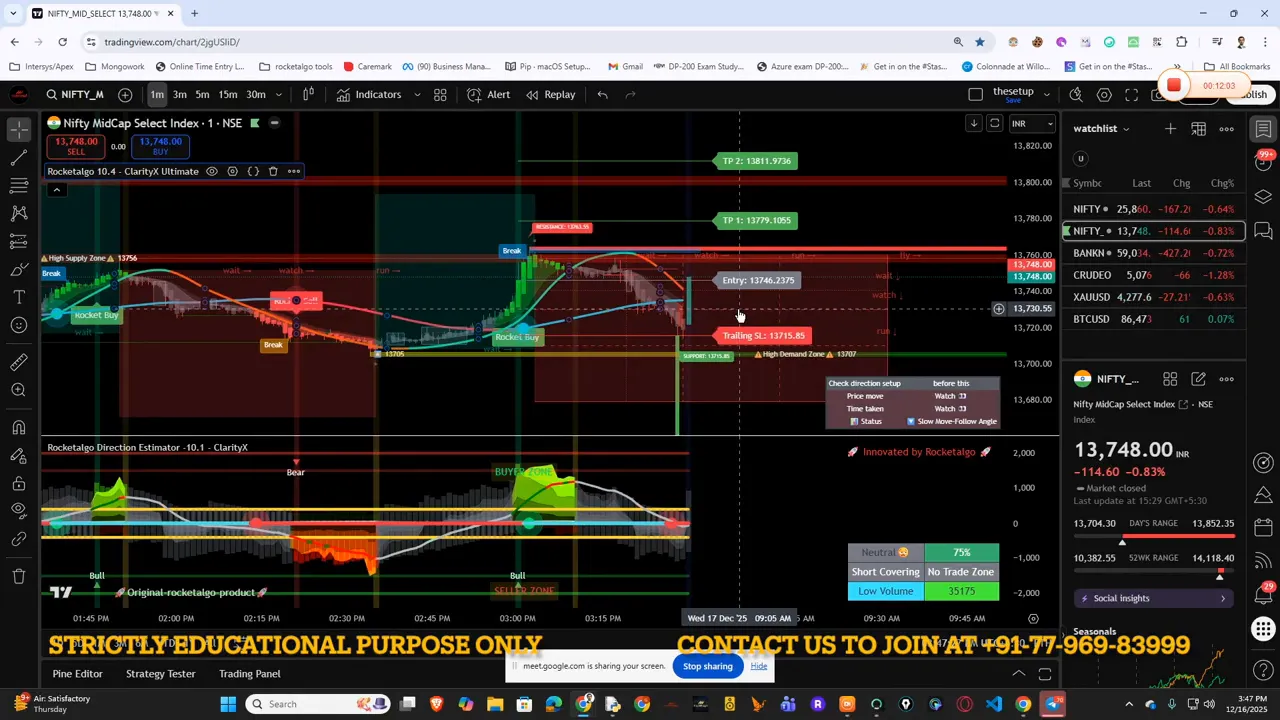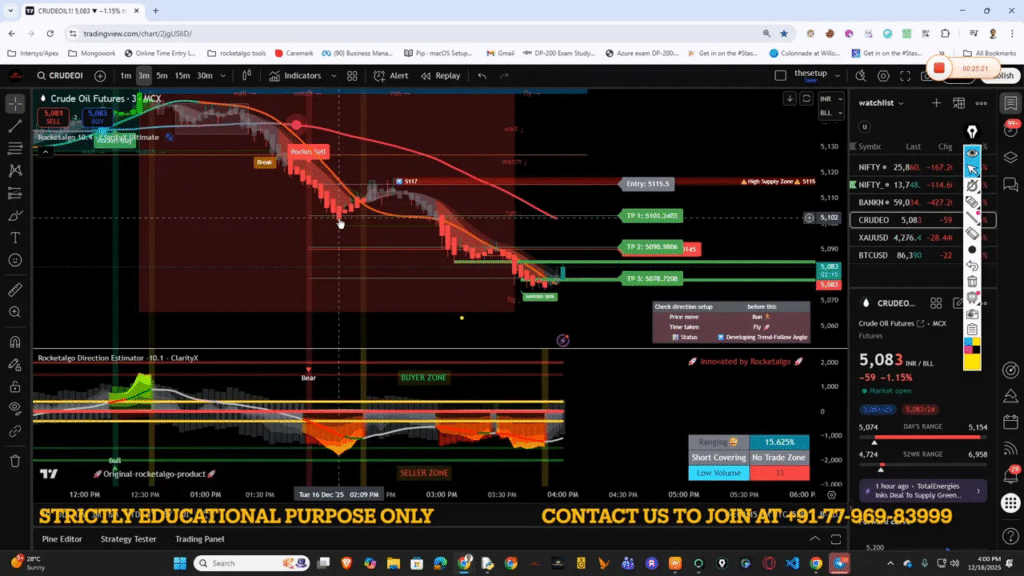

The market moves fast, but your approach does not have to be chaotic. If you trade the trading, stock market, NSE, BSE, Nifty ecosystem regularly, two things matter most: sensible risk control and simple, repeatable rules. This article collects practical lessons from real trading sessions, explains market-level signals you can read, and gives concrete steps to protect your money and privacy from common broker and scam tactics. The goal is to make your trading smarter and safer — without jargon.
Table of Contents
- 🔒 Protect your phone and data: why scams explode when the market slows
- 📞 How to identify a scam call instantly
- 📉 Market hint: when tip calls increase, the market is often slow
- 📈 Reading algorithmic hints: what to watch on your charts
- 📊 Trade management and timeframes: match instrument with timeframe
- 🧠 Strategy sanity check: beware of flashy AI claims
- 🔁 Position sizing, exits, and the inevitable U-turn
- ⚖️ Commodities vs indices: different beasts, different rules
- 🛠️ Toolbox: checklist before you trade
- 📣 Community and training: what to expect when learning
- 📚 Resources and next steps
- ❓ Frequently asked questions
- ✅ Final notes and practical takeaways
🔒 Protect your phone and data: why scams explode when the market slows
One immediate reality: when markets are slow, scammers get louder. Expect an uptick in cold calls, SMS spam, and broker-sales calls pushing “guaranteed returns.” These calls are not a coincidence — they are business. When trading activity dries up, promoters hunt for new victims.
Practical steps to reduce nuisance calls and protect your identity:
- Use Truecaller’s basic blocking and mark obvious scam numbers. It makes a difference.
- Shift your main trading SIM to a carrier with good spam labeling — in India, many traders prefer Airtel because of its spam warnings like “Airtel warning this is a scam.”
- Never hand over personal information to unknown callers. Scammers will read your full name, even your father’s name, to build credibility. Don’t feed them.
- Consider a dedicated number for trading accounts and keep it separate from social channels. If multiple brokers call you, move your connected number to a carrier that flags spam.
Data brokers buy and sell numbers rapidly. One moment your number is private; the next it is part of a cold-calling list. If you already have recurring spam calls, take action: block, change the number on sensitive accounts, and enable carrier-level spam protection.
📞 How to identify a scam call instantly
There are common scripts scammers use. If you hear phrases like “trading and investment purpose” or “XYZ person recommended you,” treat it with skepticism. Typical red flags:
- They pressure you to deposit immediately or “confirm” your account details.
- They sound scripted, repeating the same opening lines across multiple calls.
- They offer ridiculously high commissions or insist on sending profits via QR only after you pay them a commission.
Always validate independently. If someone claims to be a broker, call the firm back using an official channel. Never follow links or QR codes sent by unknown numbers.
📉 Market hint: when tip calls increase, the market is often slow
Here is a simple market intelligence rule you can use immediately: a spike in unsolicited tip calls often correlates with a slow market. When their prior tips are not working, promoters ramp up outreach to recruit fresh accounts. That surge of calls is itself a signal—treat it as a hint that market momentum is weak.
How to use this hint in practice:
- When you receive multiple unsolicited trading calls, raise your discipline threshold: trade only setups that meet your strict criteria.
- Prefer higher timeframes or stay out if institutional participation is missing. Institutions move markets; if they are absent, expect range-bound price action.
- Don’t chase tips or take “easy-win” promises. Those are often traps with hidden costs like high brokerage or withdrawal issues.
📈 Reading algorithmic hints: what to watch on your charts
Algorithms give hints in many forms — color cues, line crossings, and angle formations. Learn to read them rather than blindly rely on signals. Several practical cues to watch for in algorithmic setups:
- Line intersections — when two strength lines cross and the price reacts, watch for a quick turn. Often a brief pump will be followed by a reversal as the algorithm’s internal strength calculations adjust.
- Color and candle pattern — a subtle change from light to bright red or green can precede momentum. If your color scheme is hard to read, simplify it by switching canvas colors to high contrast.
- Support and angle formations — algorithms often mark potential breakout angles. If an angle gets hit and the candle starts to crinkle, expect follow-through or a quick retracement depending on volume.
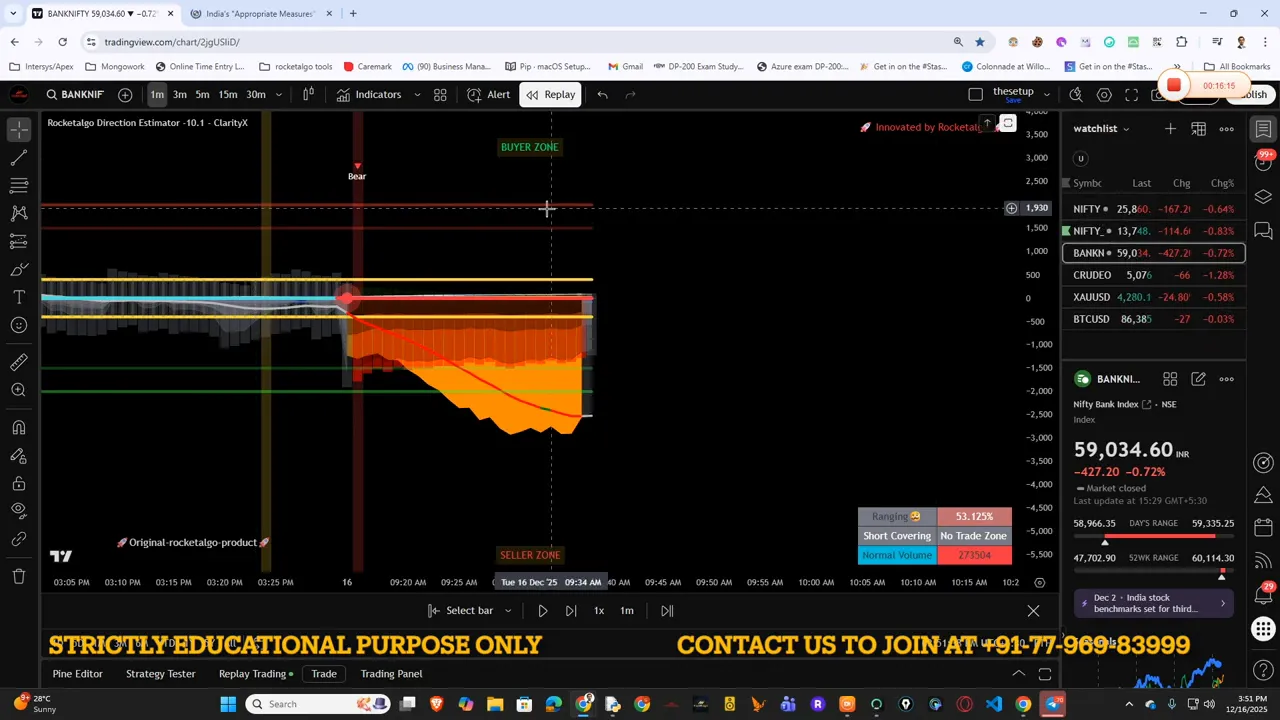
These are not magic. Algorithms are rule-based tools. Combine the algorithm’s hints with price action, volume, and institutional flow to make higher-probability decisions.
📊 Trade management and timeframes: match instrument with timeframe
One of the most useful formulas for intraday traders is simple: volatility is inversely proportional to timeframe. Translate that into action:
- Fast instruments like Nifty and Bank Nifty often suit smaller timeframes (1 to 5 minutes) for scalps or short intraday setups.
- Slower instruments like many large-cap stocks and some commodities fit better on 15-minute to hourly charts.
- Commodities behave differently: crude oil and gold react to global news and can spike on breaking events, so adjust your timeframe accordingly.
Examples:
- If you trade crude oil on a 3-minute chart, one rupee movement translates into large profit or loss quickly. Use tiny stops, strict risk per trade, and be aware that the same move on a 1-minute chart can feel chaotic.
- ITC or other slow-moving stocks may move only a few rupees across the whole week. For such instruments, a 30-minute or 1-hour timeframe gives more meaningful signals.
🧠 Strategy sanity check: beware of flashy AI claims
Every week someone promises a miraculous AI system that generates dozens of winning trades daily. Here are practical checks to avoid wasting time and capital:
- Ask for live or post-market performance records. If a system is truly consistent, its track record will be verifiable.
- Check brokerage and transaction costs. Many hypothetical strategies ignore the drag of commissions and slippage. A reported 46,000 profit in a day can turn into a large loss once brokerage is applied.
- Be skeptical of “50 trades a day” claims. High trade counts increase costs and emotional strain. Common sense: can you sustain that volume in live conditions?
True algorithmic solutions should be transparent on how they trade, show real account statements, and offer ways for you to validate performance on your own.
🔁 Position sizing, exits, and the inevitable U-turn
Algorithms will sometimes push a strong move only to reverse. When that happens, it is rarely a failure of the tool and more often a natural market correction. Your job is to manage position size and have a clear exit plan.
- Use fixed risk per trade — never risk so much that one counter move busts your account.
- Watch for the “U-turn” setup — when an angle or line is hit and the candle reverses, consider tightening stops or scaling out.
- Don’t average into a clearly failing trade without an objective reason to believe momentum will return.
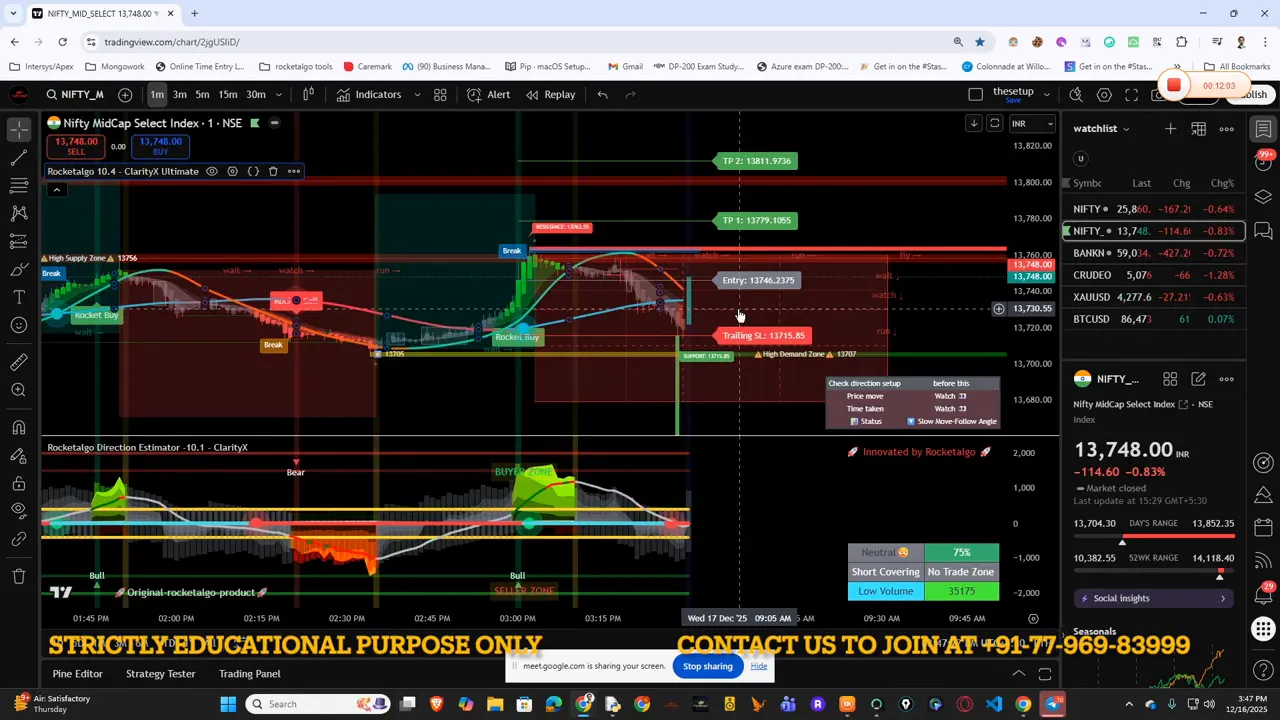
Good systems make you think before entering; disciplined exits make you survive and trade another day.
⚖️ Commodities vs indices: different beasts, different rules
Commodities like gold and crude react strongly to global sentiment and geopolitical events. Indices such as Nifty and Bank Nifty are driven more by domestic flows and earnings. This has practical consequences:
- Gold (XAUUSD) is highly sentiment-driven. In times of geopolitical tension, it can rally quickly. Use shorter timeframes and tighter stops around news.
- Indices react to domestic macro news and institutional activity. If institutions are absent, expect range-bound trade; don’t force trades.
- Stocks with low volatility require larger timeframes to avoid noise. Trading a slow stock on a 1-minute chart will generate false signals.
Understanding these differences improves choice of timeframe, stop, and position sizing.
🛠️ Toolbox: checklist before you trade
Before you place any intraday trade, run this short checklist:
- Is institutional flow visible in the instrument? If not, avoid forcing trades.
- Does the algorithm’s signal align with price action and volume?
- Are you using an appropriate timeframe for the instrument?
- Is your risk per trade defined and acceptable?
- Is your phone and account secured from potential scam contacts?
These five items remove emotional shortcuts and keep your edge.
📣 Community and training: what to expect when learning
If you are joining a trading program, look for real market interaction and live coaching rather than promises. Important markers of a credible training program:
- Live market sessions that explain rules, not just sell signals.
- Transparent discussion of losing trades and brokerage impacts.
- Material that aligns with market realities: timeframes, volatility, and instrument-specific rules.
Trainers should teach principles that scale, not secret hacks. The best learning comes from seeing setups repeatedly and understanding when they fail.
📚 Resources and next steps
To build a safe and consistent practice:
- Practice small position sizes on new strategies before scaling up.
- Keep a trade journal: log entry reason, timeframe, size, and outcome.
- Verify any third-party performance with your own testing or demo accounts.
- Use carrier and app-level protections for personal data and trading account numbers.
❓ Frequently asked questions
How do I reduce unsolicited broker and scam calls?
Enable Truecaller blocking, move your main trading number to a carrier with spam labeling, and use a separate number for brokerage accounts. Never share personal details over a cold call and verify any broker contact via official channels.
When should I avoid trading because market momentum is low?
If you notice a spike in unsolicited tip calls and institutional flow is absent, be cautious. Prefer higher timeframes or wait for a clear breakout with volume. A lack of institutional activity often leads to choppy and unpredictable price moves.
How do I choose the right timeframe for an instrument?
Use the rule volatility inversely proportional to timeframe. Fast instruments like indices suit smaller timeframes; slow stocks and some commodities need higher timeframes. Match timeframe to the instrument’s average movement and your risk tolerance.
Are AI trading systems trustworthy?
AI can be a helpful tool, but verify live performance and realistic trade counts. Ask for real account statements, consider brokerage drag and slippage, and avoid systems that promise unrealistic daily trade counts without proof.
How do I handle sudden reversals after an algorithmic signal?
Use predefined stops and scale out when a move goes in your favor. If an algorithmic hint reverses quickly, tighten stops, reduce position size, and avoid adding to the losing side unless you have a clear, rule-based reason.
✅ Final notes and practical takeaways
Trading in the trading, stock market, NSE, BSE, Nifty environment is a discipline. Protect your phone and data, match timeframes to instruments, and prioritize risk management over chasing tips. When an algorithm gives you a hint, use it as one input among several: price action, volume, and institutional flow.
Simple, repeatable habits win over flashy promises. Keep a checklist, verify claims, and trade with rules you can follow under pressure. That is the difference between surviving and thriving in markets.
Need more help |
|
Contact us by clicking the button below |
| Click me |