
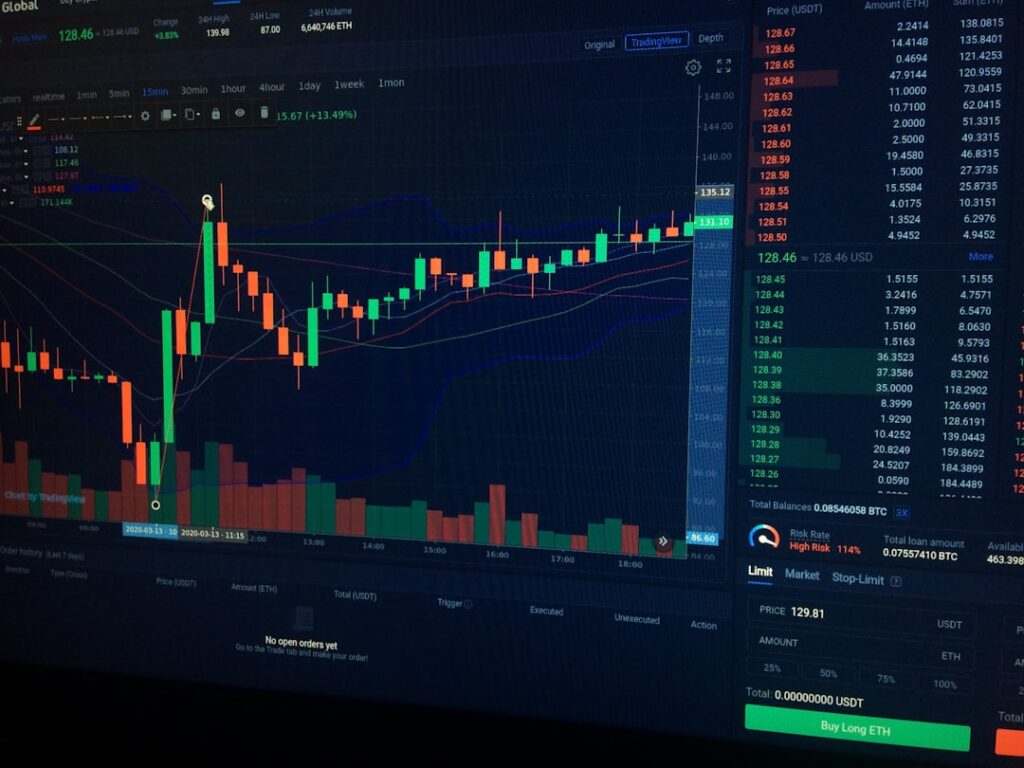
The relentless dance of the stock market has long been a stage for the interplay of logic and emotion. For centuries, human traders, guided by intuition, experience, and at times, fear or greed, have navigated its turbulent waters. However, the advent of sophisticated technological tools, particularly algorithmic trading, has introduced a new contender: the dispassionate machine. The question at the forefront of many investors’ minds is whether this automated approach can truly transcend the inherent volatility of human sentiment.
Algorithmic trading, often abbreviated as “algo trading,” is not a novel concept. Its roots can be traced back to early automation efforts aimed at executing trades faster. However, recent advancements in computing power, data analytics, and artificial intelligence have propelled algo trading into an entirely new stratosphere. What was once a tool for high-frequency execution has evolved into a complex ecosystem capable of analyzing vast datasets, identifying patterns, and making trading decisions with unprecedented speed and scale.
Speed and Scale: The Unmatched Advantage
The ability of AI agents to process information at speeds unattainable by humans is a fundamental differentiator. Consider the sheer volume of macro-economic signals, news sentiment analysis, and real-time price feeds that deluge the market. Human traders, no matter how skilled, are bound by their biological limitations. AI agents, on the other hand, can digest and interpret these data points instantaneously. This enables them to identify and exploit fleeting market inefficiencies, compressing them faster than human traders can react. Institutions like JPMorgan and Goldman Sachs have been at the forefront of integrating these AI capabilities, recognizing their power to narrow spreads and gain a significant edge.
Macroeconomic Signals: A Data Deluge
The modern financial landscape is awash in macroeconomic indicators, from inflation rates and interest rate decisions to employment figures and geopolitical developments. These factors, when analyzed in isolation, may offer limited insight. However, algorithmic systems can synthesize these disparate signals, identifying subtle correlations and predictive relationships that might be missed by human analysts. By processing this torrent of data in real-time, algorithms can anticipate market movements with greater precision.
Sentiment Analysis: Gauging the Crowd
Beyond hard data, market sentiment plays a crucial role in price discovery. News articles, social media chatter, and analyst reports all contribute to the prevailing mood. Algorithmic models can now employ sophisticated natural language processing (NLP) techniques to gauge this sentiment, assigning numerical values to positive, negative, and neutral commentary. This allows algorithms to react to shifts in market psychology before they fully manifest in price action, creating an advantage in a world driven by narrative.
Execution Speed: The Millisecond Edge
In the realm of high-frequency trading, even milliseconds matter. Algorithmic systems can execute trades orders of magnitude faster than humans. This is particularly advantageous in volatile markets where nimble execution can capture small price discrepancies before they disappear. This speed advantage allows algorithms to systematically profit from market friction, a concept that has become increasingly prevalent as algorithmic penetration deepens.
In exploring the dynamics of algorithmic trading versus human emotions, a related article that delves into enhancing trading strategies is available at this link: Boost Your Trading with RocketAlgo Analytics for Every Trader on Instagram. This article provides insights into how traders can leverage analytics tools to improve their decision-making processes, potentially mitigating the impact of emotional biases that often affect human traders.
Detaching from the Emotional Tides
Perhaps the most compelling argument for algorithmic trading’s superiority lies in its ability to divorce decision-making from the realm of human emotions. Fear, greed, anxiety, and overconfidence are potent forces that can derail even the most experienced human trader. Algorithms, by their very nature, operate on logic and predefined rules, unaffected by the psychological pressures that plague human judgment.
The Tyranny of Gut Feelings
Human traders often rely on their “gut feeling” or intuition, developed over years of market observation. While this can sometimes prove prescient, it is also a breeding ground for irrational decisions. A trader might hold onto a losing position out of stubbornness, or sell a winning one too early out of fear of losing profits. Algorithmic trading, in contrast, replaces these subjective impulses with objective, data-driven criteria.
Rule-Based Decision Making: A Rational Framework
At its core, algorithmic trading is about implementing a set of predefined rules. These rules can encompass a wide range of technical indicators, price action patterns, and fundamental data points. When specific conditions are met, the algorithm executes a predetermined action, be it buying, selling, or closing a position. This systematic approach ensures consistency and removes the emotional component from the trading process.
Strict Exit Criteria: Prudent Risk Management
A critical aspect of successful trading is effective risk management. Human emotion often interferes with this, leading to delayed exits from losing trades or premature exits from profitable ones. Algorithmic trading enforces strict exit criteria, ensuring that positions are closed when predefined loss limits are reached or profit targets are met. This rigid adherence to the plan minimizes the potential for significant losses driven by emotional decision-making.
Loss Minimization: Cutting Bets Swiftly
When a trade begins to move against the algorithm’s predictions, the predetermined exit strategy kicks in. This might involve a stop-loss order that automatically liquidates the position once a certain level of loss is incurred. This prevents small losses from snowballing into catastrophic ones, a common pitfall for emotionally driven traders.
Profit Maximization: Letting Winners Run (Within Limits)
Similarly, algorithms can be programmed to trail stop-losses to lock in profits as a trade moves favorably. While this might not always capture the absolute peak of a rally, it ensures that a significant portion of the gains are preserved, preventing the temptation to exit prematurely due to fear of a reversal.
The LLM Revolution: A Glimpse into Machine Rationality
The emergence of Large Language Models (LLMs) has opened new frontiers in understanding how artificial intelligence might replicate, or perhaps fundamentally differ from, human trading behavior. Research into LLM agents trading in simulated markets has yielded fascinating insights.
LLM Agents: Enhanced Rationality, Different Dynamics
Studies examining LLM agents in simulated trading environments have revealed a distinct characteristic: these agents tend to trade with lower bias. They exhibit a stronger focus on fundamental value and, crucially, demonstrate better forecasting abilities, often showing a lower Mean Squared Error (MSE) compared to human traders in similar scenarios. This suggests a more rational approach to market analysis.
Reduced Bias in Decision Making
Human biases, such as confirmation bias (seeking information that confirms existing beliefs) or recency bias (overemphasizing recent events), can significantly distort trading decisions. LLM agents, being devoid of these psychological predispositions, tend to evaluate information more objectively, leading to more balanced and potentially more profitable trading strategies.
Fundamental Focus over Speculation
While human traders might succumb to speculative frenzies or chase trending assets based on price momentum alone, LLM agents appear to maintain a stronger grounding in fundamental analysis. They are more likely to prioritize the intrinsic value of an asset, making decisions based on a deeper understanding of its underlying economics rather than mere market sentiment.
The Absence of Human-Like Bubbles and Crashes
An intriguing finding from LLM simulations is their inability to replicate human-driven market phenomena like speculative bubbles and subsequent crashes. Even when exposed to news shocks that might trigger panic or euphoria in human markets, LLM agents do not exhibit the same herd behavior or exaggerated price swings. This highlights a key difference in how they process and respond to information versus the complex, often irrational, dynamics of human crowd behavior.
Simulating News Shocks: A Controlled Response
When unexpected news enters the market, human traders might react erratically, driven by fear of missing out (FOMO) or panic selling. LLM agents, on the other hand, tend to process this information within their established frameworks, leading to more measured and proportional adjustments to their strategies. This controlled response, while perhaps less dramatic, may be more sustainable in the long run.
The Eroding Edges: A Market Becoming Too Efficient
The increasing sophistication and proliferation of algorithmic trading have a profound impact on market efficiency. As more capital and processing power are deployed through algorithms, the opportunities for human traders to exploit subtle mispricings are rapidly diminishing.
Algorithmic Saturation: The Shrinking of “Slow Patches”
The stock market, at its core, is a mechanism for price discovery. In an ideal, perfectly efficient market, all available information is immediately reflected in asset prices, leaving no room for arbitrage or predictable gains. Algorithmic trading, by its very design, seeks to identify and exploit any deviations from this ideal. As more sophisticated algorithms engage in this process, they effectively “eat away” at these inefficiencies. The “slow patches” – periods or assets where information asymmetry allows for profitable manual trading – are shrinking at an accelerated pace.
Multi-Agent Networks: Collaborative Inefficiency Exploitation
The development of multi-agent networks, such as the research project OpenClaw, further amplifies this effect. These systems allow multiple algorithms to interact and learn from each other, creating a more dynamic and self-optimizing trading environment. This collaborative approach to exploiting inefficiencies makes it increasingly difficult for individual human traders to compete on the same playing field. Strategies that might have been profitable for years can become unprofitable almost overnight as algorithmic networks adapt and converge.
The Displacement of Human “Slow Patches”
This accelerating efficiency means that traditional human strategies based on identifying mispriced assets through manual research and analysis are becoming less viable. The ability of algorithms to scan, analyze, and execute across vast markets means that any identifiable inefficiency is likely to be addressed by machines long before a human can capitalize on it. The “edge” that human traders once possessed is systematically being eroded by the relentless march of algorithmic trading.
In exploring the dynamics of algorithmic trading versus human emotions, it is insightful to consider strategies that can enhance trading performance. A related article discusses various day trading strategies that can help maximize profits, providing valuable insights for traders looking to improve their approach. You can read more about these strategies in the article on maximizing profits through day trading. This connection highlights how understanding both algorithmic methods and effective trading strategies can lead to better decision-making in the financial markets.
LLM Limitations: The Unreplicable Human Element
| Metrics | Algorithmic Trading | Human Emotions |
|---|---|---|
| Speed of Execution | High | Variable |
| Consistency | High | Variable |
| Emotional Bias | Low | High |
| Adaptability | High | Variable |
| Decision Making | Based on predefined rules | Based on emotions and intuition |
Despite the striking rationality and forecasting capabilities of LLM agents, their current limitations in replicating emergent market phenomena underscore a crucial point: the stock market is not solely a rational system. Human behavior, with its collective irrationality and interconnectedness, introduces complexities that current AI models may struggle to fully capture.
Reduced Variance and Heuristics: A Smoother Ride
The reduced variance observed in LLM agent trading suggests a more stable and less volatile approach. This is a desirable quality for institutional investors seeking predictable returns. However, this also implies that LLMs may not accurately model the heuristic-driven decision-making processes that often characterize human traders, especially in more speculative or emotional market conditions.
Inability to Faithfully Replicate Booms and Busts
The most significant LLM limitation highlighted is their failure to faithfully replicate emergent market phenomena like booms and busts. These cyclical occurrences are often driven by a confluence of factors, including psychological herding behavior, feedback loops, and the amplification of sentiment. While LLMs can process information about these events, they do not appear to embody the underlying human psychological drivers that create and sustain them. This suggests that while AI can be a powerful tool for rational trading and analysis, it may not be able to fully simulate or replace the complex, often irrational, tapestry of human market participation.
The Enduring Role of Human Factors
This does not necessarily mean that human intuition or experience is obsolete. In fact, it might suggest that human traders could find their niche in understanding and capitalizing on the very irrationalities that algorithms struggle to replicate. The ability to anticipate herd mentality, the impact of sudden sentiment shifts, or the psychological triggers for market corrections may remain a domain where human insight retains a distinct advantage. The future likely involves a hybrid approach, where the efficiency and rationality of algorithms are augmented by the nuanced understanding of human behavior and the complex dynamics of collective decision-making.
FAQs
What is algorithmic trading?
Algorithmic trading is the use of computer programs to execute trading strategies based on pre-defined criteria and without human intervention. These programs can analyze market data and execute trades at a speed and frequency that is impossible for a human trader.
How does algorithmic trading compare to human emotions in trading?
Algorithmic trading is not influenced by human emotions such as fear, greed, or overconfidence, which can lead to irrational decision-making in trading. Instead, it relies on data analysis and predefined rules to make trading decisions.
Can algorithmic trading beat human emotions in trading?
Algorithmic trading has the potential to outperform human emotions in trading by consistently executing trades based on data analysis and predefined rules. However, it is important to note that algorithmic trading also comes with its own set of risks and challenges.
What are the advantages of algorithmic trading over human emotions?
Algorithmic trading can offer several advantages over human emotions in trading, including the ability to execute trades at high speeds, the elimination of emotional biases, the ability to backtest trading strategies, and the potential for 24/7 trading.
What are the limitations of algorithmic trading compared to human emotions?
While algorithmic trading can offer advantages, it also has limitations such as the potential for technical glitches, the need for continuous monitoring and adjustment of trading algorithms, and the inability to account for unforeseen market events. Additionally, human intuition and judgment can still play a valuable role in trading.

