
Trading,Stock Market,Options,Nifty 50 is not just about candles and indicators. It is also about context, patience, and understanding why price is moving. The 23 April 2026 session had all of that in one place: a classic opening trap in Nifty, a clean directional setup later in the day, sharp weakness in Bank Nifty, a straightforward midcap move, a solid trade in gold, and an important reminder that AI-related news is now a real market factor.
The core lesson was simple. Do not rush into the first move just because it looks powerful. Read the structure, read the flow, and pay attention to the bigger trigger behind sector weakness. If you trade Trading,Stock Market,Options,Nifty 50 seriously, this kind of daily reading matters.
Table of Contents
- Nifty opened with a trap, not a trend
- The better Nifty trade came later
- Why Bank Nifty was weak
- Understanding the cyber risk angle in plain language
- Midcap remained clean and straightforward
- Gold offered a solid trade
- Bitcoin had no meaningful setup
- The bigger lesson: news is now part of trading edge
- Key trading lessons from the day
- What this means for Trading,Stock Market,Options,Nifty 50 going forward
- FAQ
Nifty opened with a trap, not a trend
The first thing to notice on Nifty was the opening behaviour. The market opened, gave three strong downside candles, and then stopped trending. Instead of continuation, price started moving sideways.
That is what was described as a three candle trap.
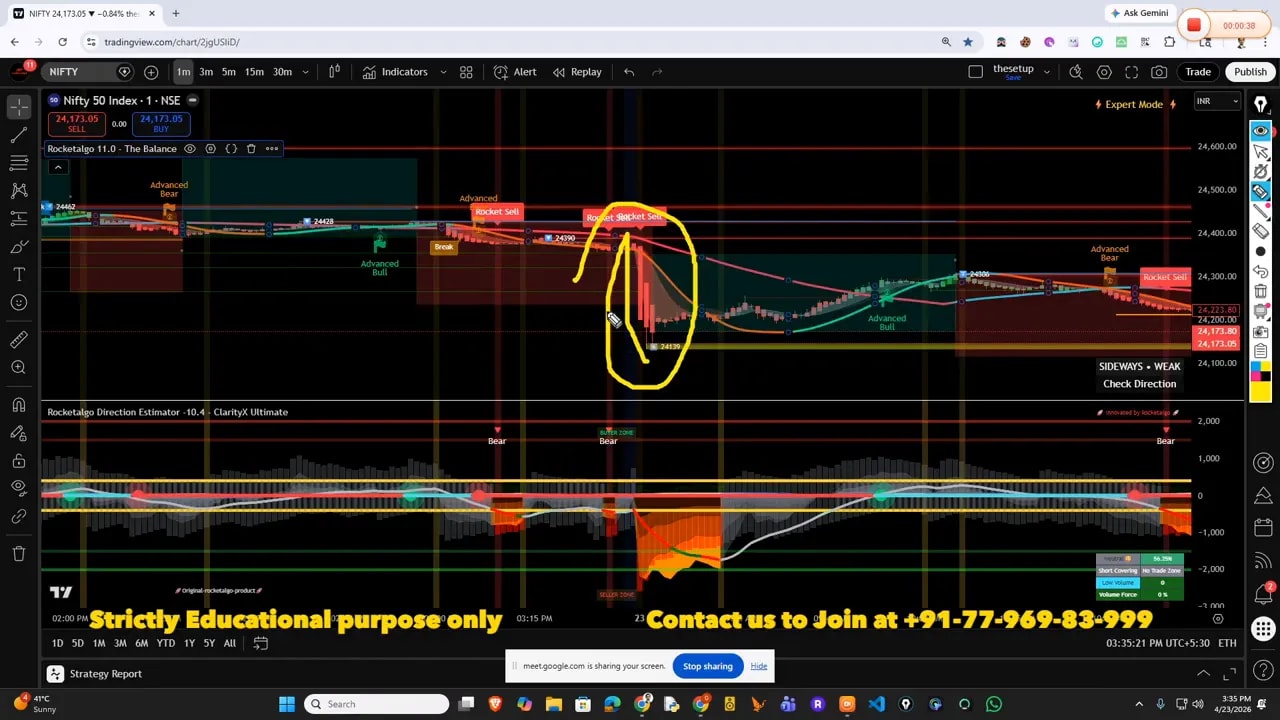
The idea behind this pattern is important:
Before the move, there is no clear trend.
At the open, a sudden burst of momentum appears.
Traders get tempted to enter because the candles look large and convincing.
Right after entry, the momentum disappears and the market goes flat.
Sometimes these three candles are big. Sometimes they are smaller. The size can vary, but the behaviour is the same: an impulse, then a stall. That stall is what matters.
In practical terms, this is a warning not to chase the opening move blindly. These setups often exist to trap impatient traders. The right response is patience. If the trade is genuine, another cleaner opportunity will come. If the move was only there to lure entries, waiting saves money and emotional energy.
The better Nifty trade came later
After the opening trap, Nifty delivered a much cleaner trade. This was the kind of move that makes sense to participate in because the structure was better and the follow-through was there.
The move discussed was roughly a 15 to 20 point trade on Nifty. That may sound modest if someone only looks at headline numbers, but intraday, a well-structured 15 to 20 point move is absolutely tradable when it comes with clarity.
The emphasis here was not just on points. It was on the quality of the setup. This was not a weak or hesitant move. It had visible momentum and a cleaner character compared to the opening fake-out.
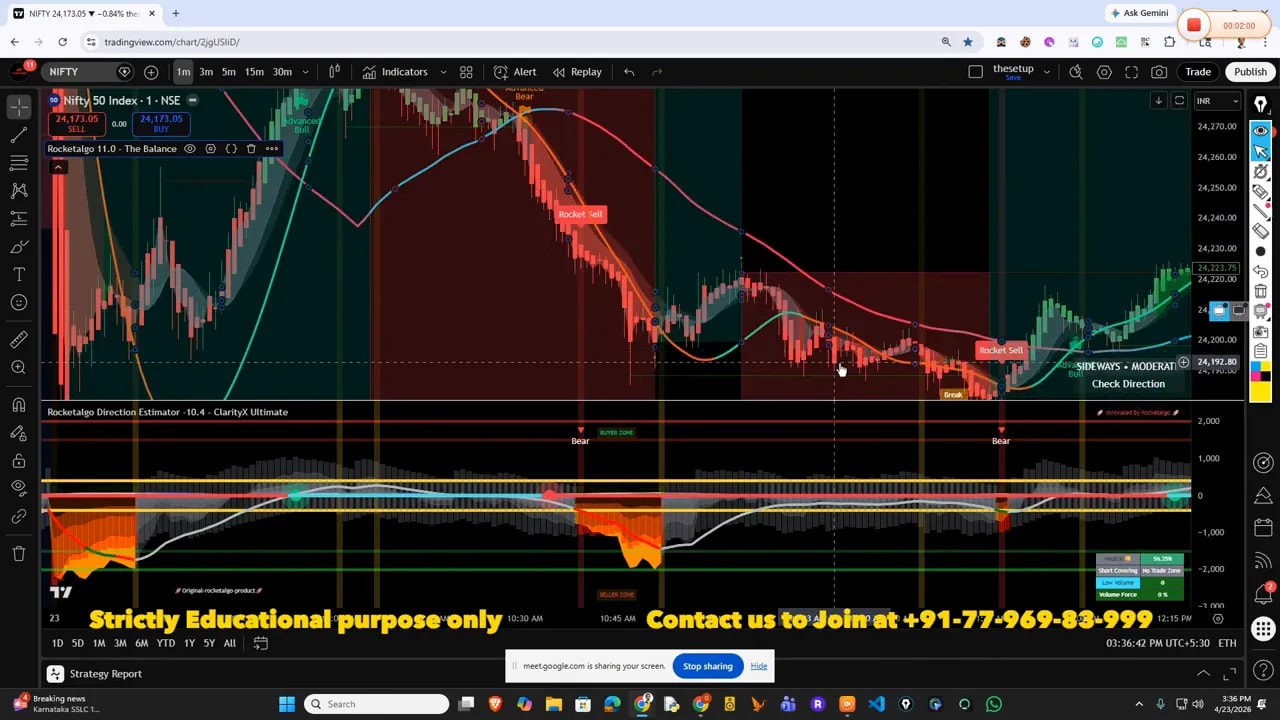
The trade was also explained through Rocketalgo’s internal framework, referred to as the A, B, C, M, P formula, with elements like:
Angle
Breakout candle
Money flow percentage
Combination matching
The exact internal training details belong to their system, but the broader takeaway is useful for any trader. Good trades usually happen when multiple conditions align, not when one random candle looks exciting.
Why Bank Nifty was weak
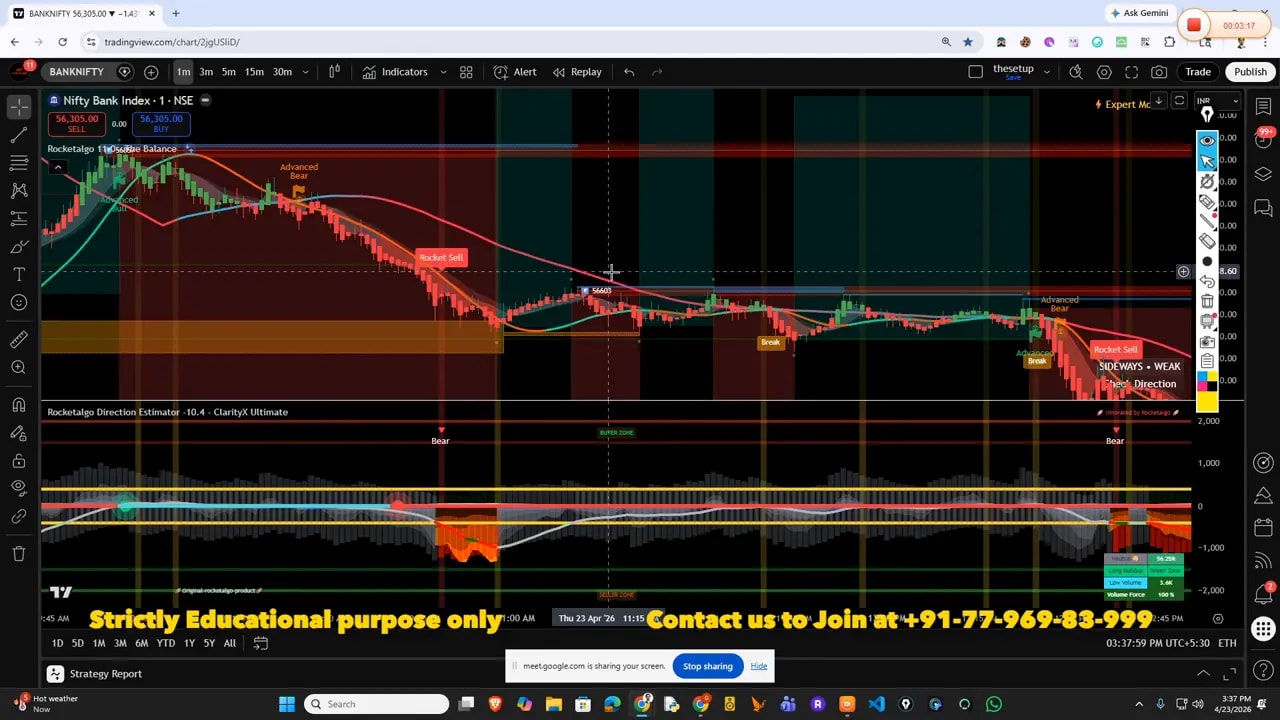
Bank Nifty was the bigger story of the day.
The chart behaviour was clear first: gap down, then further selling. But the more important part was the attempt to connect the price action with a broader reason instead of treating it like a random move.
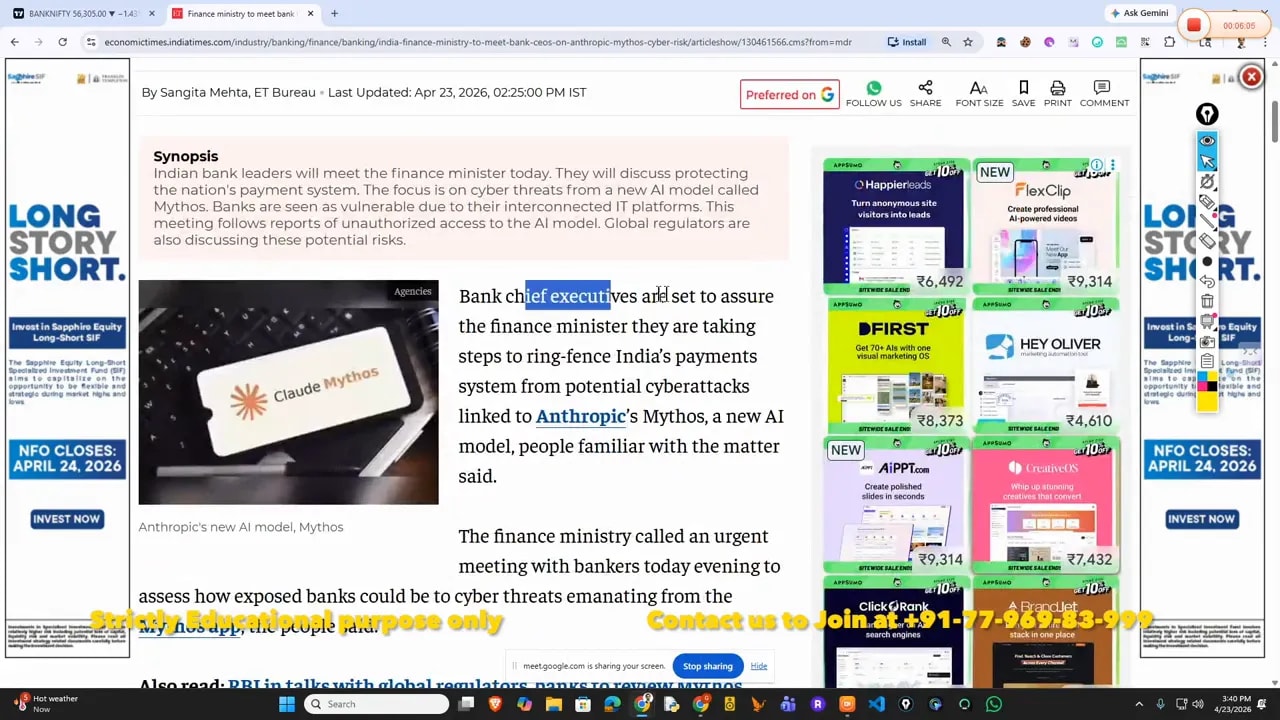
The explanation given was that banking stocks were under pressure due to concerns linked to an AI update from Anthropic, specifically around a product referred to as Mythos. The concern was not framed as ordinary tech hype. It was framed as a potential cybersecurity and financial system risk.
Several points were highlighted around this:
Reports suggested Microsoft was integrating Mythos into security-related workflows.
There were concerns that advanced AI capabilities could increase cyber risk.
Indian authorities and banking leaders were reportedly taking the issue seriously.
The finance ministry was said to be meeting bank CEOs to assess risk exposure, especially around payment systems.
Banks were seen as especially vulnerable because their IT systems interact with many stakeholders and layers of infrastructure.
The practical implication was this: if market participants believe there is a real cybersecurity threat to banking operations, they do not wait for damage to happen before repricing the sector. They react early. That fear alone can create pressure in Bank Nifty and banking stocks.
Why this matters beyond one trading day
This was not presented as a one-off headline. The larger message was that AI-related news can now become a direct market-moving variable.
In older market cycles, traders were mainly reacting to inflation, rates, earnings, government policy, or geopolitical risk. Those still matter. But now there is another layer: AI announcements that can affect cybersecurity, jobs, software demand, market sentiment, and sector valuations.
That is especially relevant for anyone active in Trading,Stock Market,Options,Nifty 50. If you only read charts and ignore the trigger, you can miss why a sector is moving with unusual intensity.
The comparison with a previous Anthropic update
To make the point stronger, the session referred to an earlier Anthropic product update related to coding tools. The argument was that when that update came out, Indian IT-related stocks saw significant pressure, with market value destruction running into very large numbers in a short time.
Whether one measures the exact number conservatively or aggressively, the lesson remains the same: major AI product updates can move listed sectors fast.
So when a fresh AI development raises concern around banking systems, traders cannot dismiss it as background noise. The market may treat it as a real risk long before television panels fully catch up.
Understanding the cyber risk angle in plain language
The discussion around AI and banks can sound abstract, so it helps to simplify it.
Traditional cyber fraud often relies on phishing, impersonation, or social engineering. The fear with more advanced AI systems is that they may go further by helping attackers identify weak points, understand internal technical workflows, or automate forms of attack at a much higher level.
In a banking environment, that becomes serious very quickly because:
Payment systems are interconnected.
Banking infrastructure is layered and complex.
Any vulnerability can affect trust, operations, and compliance.
Even the possibility of disruption can trigger institutional caution.
The point was not to create panic. The point was to understand why the market might punish bank stocks before a final conclusion is reached.
Midcap remained clean and straightforward
Compared to Nifty’s opening trap and Bank Nifty’s event-driven weakness, the midcap setup was described as much more straightforward.
The read was simple:
Market opened with a gap down.
The setup aligned cleanly.
There was no major change or confusion in structure.
The move stayed on the downside.
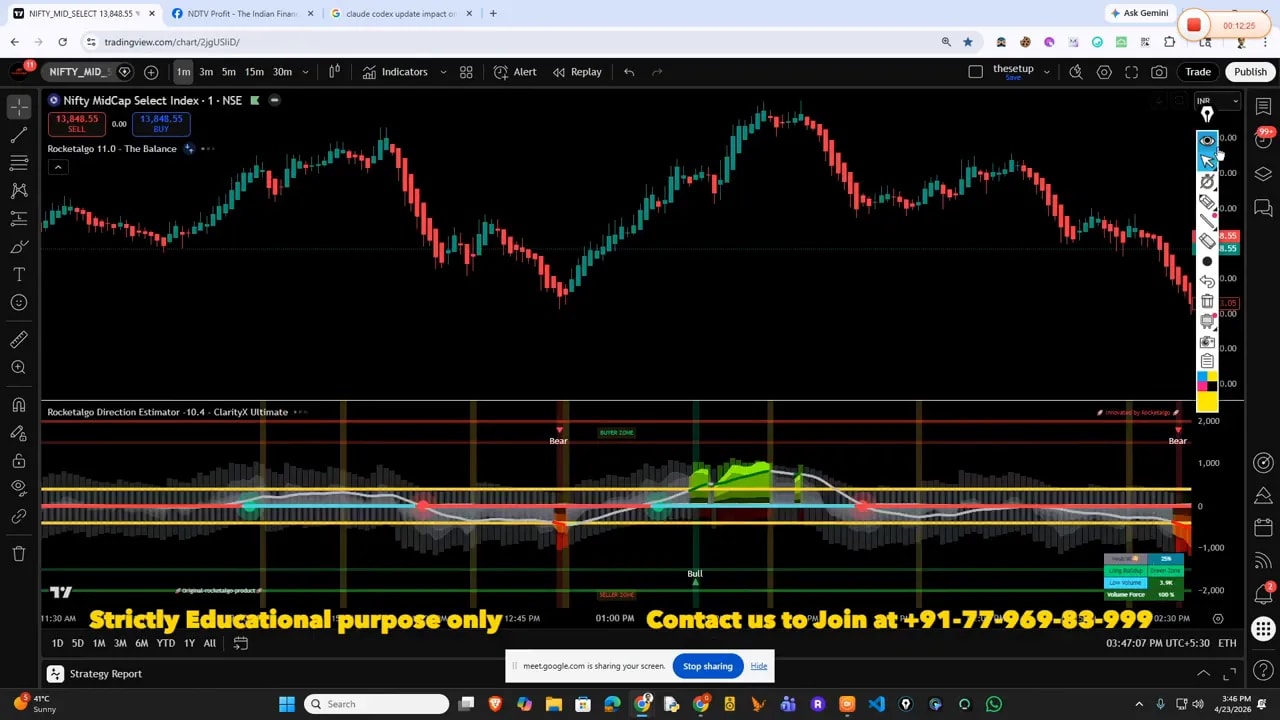
This is a useful contrast. Not every market segment behaves with the same complexity on the same day. Some instruments need careful filtering. Others are cleaner. Good traders do not force equal effort into every chart. They identify where the setup is easiest to read.
Gold offered a solid trade
Gold was highlighted as another good opportunity. Even though it was described modestly at first, the actual move was meaningful.
The price reference discussed was a move from around 4703.5 down to 4695, roughly an 8 dollar move. In lot terms, that translated into a worthwhile intraday trade.
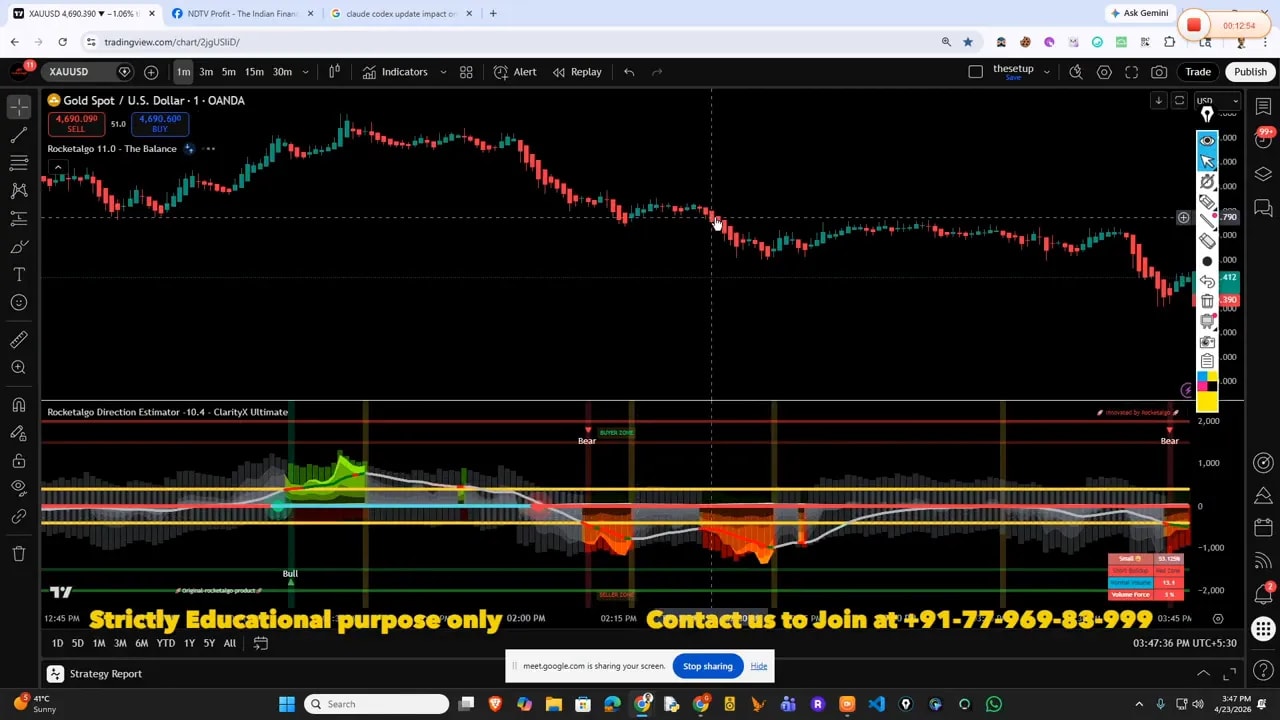
The broader point here was that while people get distracted by noisy instruments, a slower and cleaner setup can quietly offer better quality. Gold often behaves this way. It may not always look dramatic, but when structure aligns, it can produce disciplined opportunities.
For traders involved in Trading,Stock Market,Options,Nifty 50, this is another reminder: do not become so index-focused that you ignore cleaner assets when they set up well.
Bitcoin had no meaningful setup
Bitcoin was mentioned briefly with a very practical conclusion: there was nothing to trade there.
That may be one of the healthiest parts of any market review. Not every instrument deserves action. One of the fastest ways to improve trading is to normalize saying, “No setup, no trade.”
Many avoidable losses come from trying to manufacture opportunity in a chart that is simply not offering one.
The bigger lesson: news is now part of trading edge
One of the strongest messages from the session was that traders and investors need to keep an eye on news flow, especially AI-related news.
This was not said in a vague motivational way. It was tied directly to market action. When technology changes quickly, the effect does not stay inside the tech sector. It spills into banks, software companies, jobs, payment systems, and sentiment across the broader market.
In other words, if you participate in Trading,Stock Market,Options,Nifty 50, you are no longer just tracking charts and earnings. You are also tracking how AI developments may reshape risk.
AI and employment concerns
The session also referenced public comments attributed to Anthropic leadership about job displacement, especially in IT and entry-level roles. The warning was that AI could remove a large share of certain jobs over the next few years, with some statements suggesting that the timeline could be much faster than people expect.
This concern was connected to visible cuts and downsizing in technology-related roles. The point was not to make a dramatic prediction. It was to underline that AI is already affecting markets and could increasingly affect livelihoods, hiring, and sector performance.
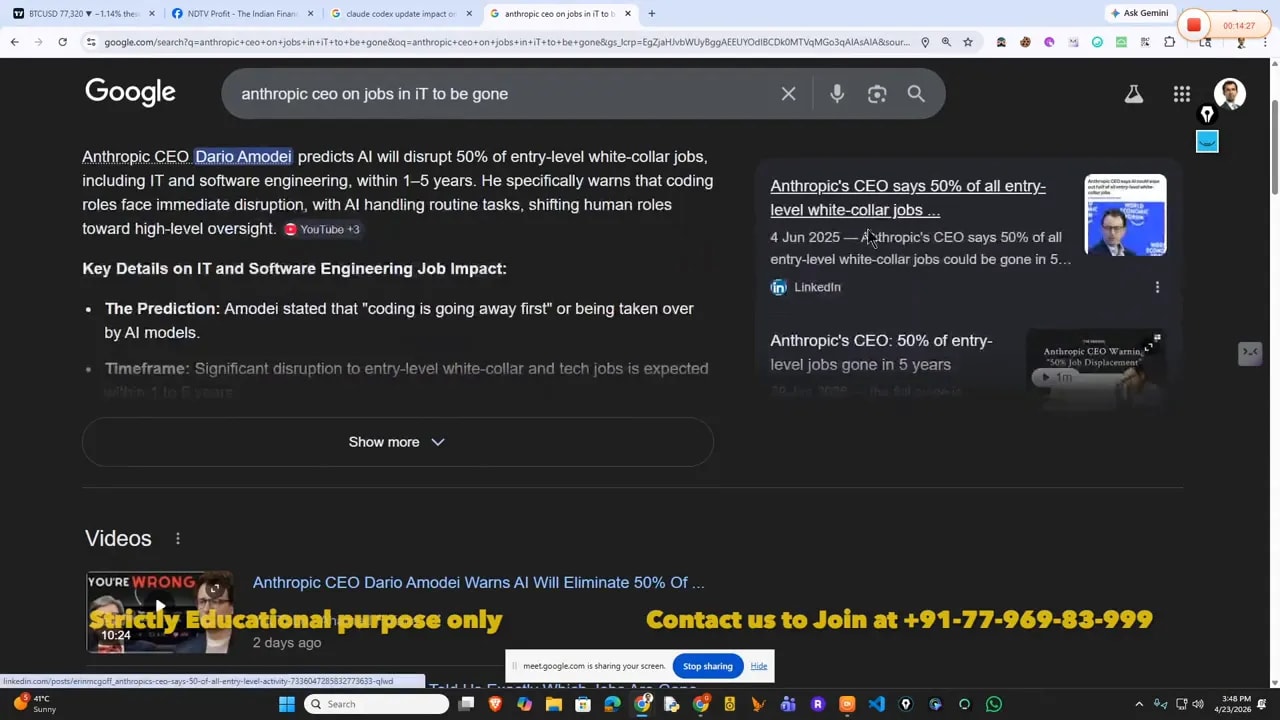
That matters because stock prices often move ahead of social acceptance. By the time a major shift becomes obvious in daily life, the market may have already repriced companies exposed to it.
Key trading lessons from the day
If you strip the entire session down to the practical lessons, here is what stands out:
-
Do not chase the open blindly.
Three hard candles at the open do not automatically mean trend continuation. Watch for the three candle trap. -
Wait for structure to improve.
The better Nifty trade came after the trap, not during it. -
Respect sector-specific news.
Bank Nifty weakness was interpreted through a real narrative around AI and cyber risk, not only through charts. -
Take the clean setup, not the popular one.
Midcap and gold were clearer than some of the noisier action elsewhere. -
No setup is also a valid outcome.
Bitcoin did not offer anything meaningful, and that is perfectly fine. -
Follow AI news seriously.
AI is no longer a side topic. It can move sectors, valuations, and market psychology.
What this means for Trading,Stock Market,Options,Nifty 50 going forward
The most valuable part of a market overview is not the hindsight. It is the framework it builds for the next session.
Going forward, there are two things to keep balanced:
Technical patience: do not enter because the candle is exciting.
News awareness: understand what can actually drive fear or confidence in a sector.
This balance is becoming essential in Trading,Stock Market,Options,Nifty 50. A setup may look good on the chart, but if the market is repricing a major narrative, the move can extend further or fail faster than normal. Likewise, a scary opening move may turn into nothing if it is only a trap.
Patience and awareness are no longer optional. They are edge.
FAQ
What is a three candle trap in Nifty?
A three candle trap is when the market opens and prints three strong candles in one direction, creating the impression of a new trend, but then momentum dies and price starts moving sideways. It often traps traders who enter too early expecting continuation.
Why was Bank Nifty weak on 23 April 2026?
The weakness was linked to concerns around an Anthropic AI update called Mythos and the potential cybersecurity risk it could pose to banking systems and payment infrastructure. Reports of government-level attention and bank CEO discussions added to the market’s caution toward banking stocks.
Was there a good Nifty trade despite the opening trap?
Yes. After the opening fake-out, Nifty later offered a cleaner momentum trade of roughly 15 to 20 points. The key lesson was to avoid rushing into the first move and wait for better alignment.
What happened in midcap and gold?
Midcap was described as relatively straightforward on the downside, with no major setup confusion. Gold also offered a quality move, with an approximately 8 dollar decline highlighted as a meaningful intraday opportunity.
Why is AI news important for Trading,Stock Market,Options,Nifty 50?
AI news can now affect multiple sectors directly, including banks, software, IT services, and broader market sentiment. Product launches, cybersecurity implications, and employment concerns can quickly translate into price action, so AI developments are becoming part of serious market analysis.
Was Bitcoin tradable in this session?
No meaningful Bitcoin setup was identified. The takeaway was simple: when there is no clear trade, it is better to stay out than to force an entry.
Educational note: this discussion is for learning and market awareness. It is not a buy or sell recommendation. Trading and investing involve risk, and independent research remains essential.

